
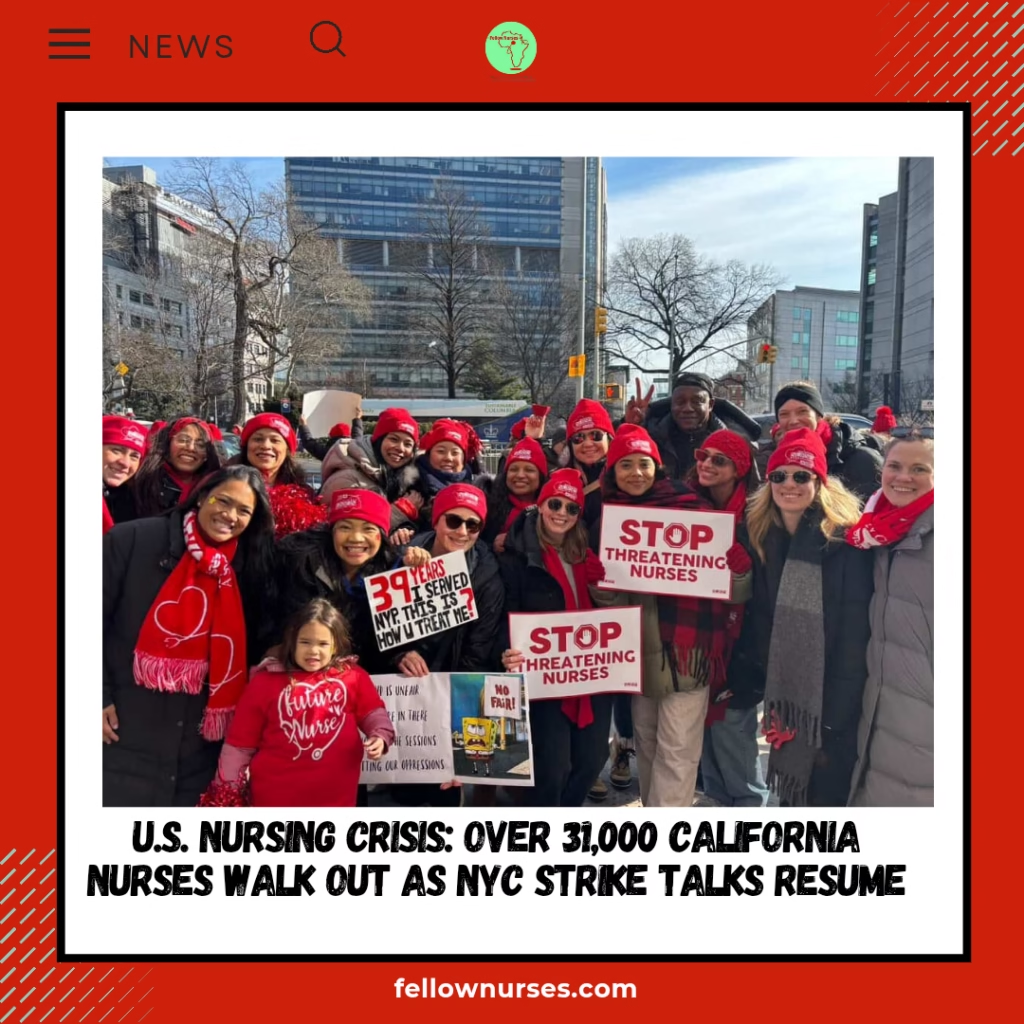
U.S. NURSING CRISIS: Over 31,000 California Nurses Walk Out as NYC Strike Talks Resume
Breaking News – Fellow Nurses Africa
26 January 2026
In a significant escalation of labour tensions in the United States healthcare sector, more than 31,000 registered nurses and other frontline healthcare professionals at Kaiser Permanente facilities in California and Hawaii have begun an open-ended strike. The action, which commenced at 7:00 a.m. local time on 26 January 2026, highlights deepening concerns over staffing shortages, patient safety, fair compensation, and working conditions amid a broader national nursing workforce crisis.
👉 Join our Whatsapp channel Here
The strike is led by the United Nurses Associations of California/Union of Health Care Professionals (UNAC/UHCP), representing nurses, nurse practitioners, pharmacists, midwives, physician assistants, rehabilitation therapists, and other specialists across more than two dozen hospitals and hundreds of clinics. Union leaders cite chronic understaffing that they say compromises patient care, unfair labour practices by Kaiser Permanente management—including attempts to bypass agreed national bargaining processes—and proposals that would reduce benefits and retirement security for certain groups.
Kaiser Permanente, one of the largest not-for-profit healthcare providers in the US, has described its latest contract offers as among the strongest in its history, including substantial wage increases (averaging around 30% when adjustments are factored in). The organisation maintains it is committed to good-faith negotiations and has contingency plans in place, including temporary staffing, to ensure continuity of care during the disruption. However, the union insists that core issues around enforceable safe staffing ratios and protections against burnout remain unresolved.
This development coincides with renewed momentum in separate negotiations in New York City, where the New York State Nurses Association (NYSNA) represents nearly 15,000 striking nurses at major private hospital systems including Mount Sinai, Montefiore Medical Center, and NewYork-Presbyterian. The NYC strike, which entered its second week on 26 January, centres on similar demands: maintaining health benefits, improved staffing levels, protections against workplace violence, and competitive pay amid rising living costs.
Recent reports indicate progress in New York, with agreements reached to maintain nurses’ current health benefits at select hospitals following mediated talks urged by state and city officials, including Governor Kathy Hochul and Mayor Zohran Mamdani. While full resolutions remain elusive, the resumption of daily bargaining sessions signals potential pathways to settlement in one major dispute even as another intensifies on the West Coast.
These concurrent actions underscore a persistent US nursing crisis driven by post-pandemic burnout, an ageing population increasing demand for care, and ongoing shortages projected to worsen in the coming years. Experts argue that without systemic reforms—such as mandated safe staffing ratios and investment in workforce retention—the healthcare system risks further strain, with implications for patient outcomes and nurse well-being.
Fellow Nurses Africa continues to monitor these developments closely, recognising the global ripple effects on nursing advocacy, migration patterns, and standards of practice. Nurses worldwide face parallel challenges, and collective action remains a powerful tool for advancing safer, more equitable healthcare environments.
👉 Join our Whatsapp channel Here
Fellow Nurses Africa is the independent voice of African nursing, we educate, inform and support nurses across Africa

Kehinde Oluwatosin is one of the many editors here at Fellow Nurses Africa and fellownurses.com.
He is a registered nurse with a Master of Science degree in healthcare leadership from the University of Hull, United Kingdom. Kehinde is passionate about advancing the nursing profession across Africa. As Co-Founder of Fellow Nurses Africa, he plays a key role in shaping editorial direction, ensuring our content educates, informs, and empowers nurses continent-wide.
With expertise in leadership, patient flow, and healthcare operations, Kehinde brings valuable insights to nursing news, career development, and policy discussions. He is committed to amplifying the voice of African nurses and driving positive change in the profession.