Kaduna Establishes State’s First Post-Basic Nursing College in Rigasa
FNA NEWS, 16th OF OCTOBER, 2026
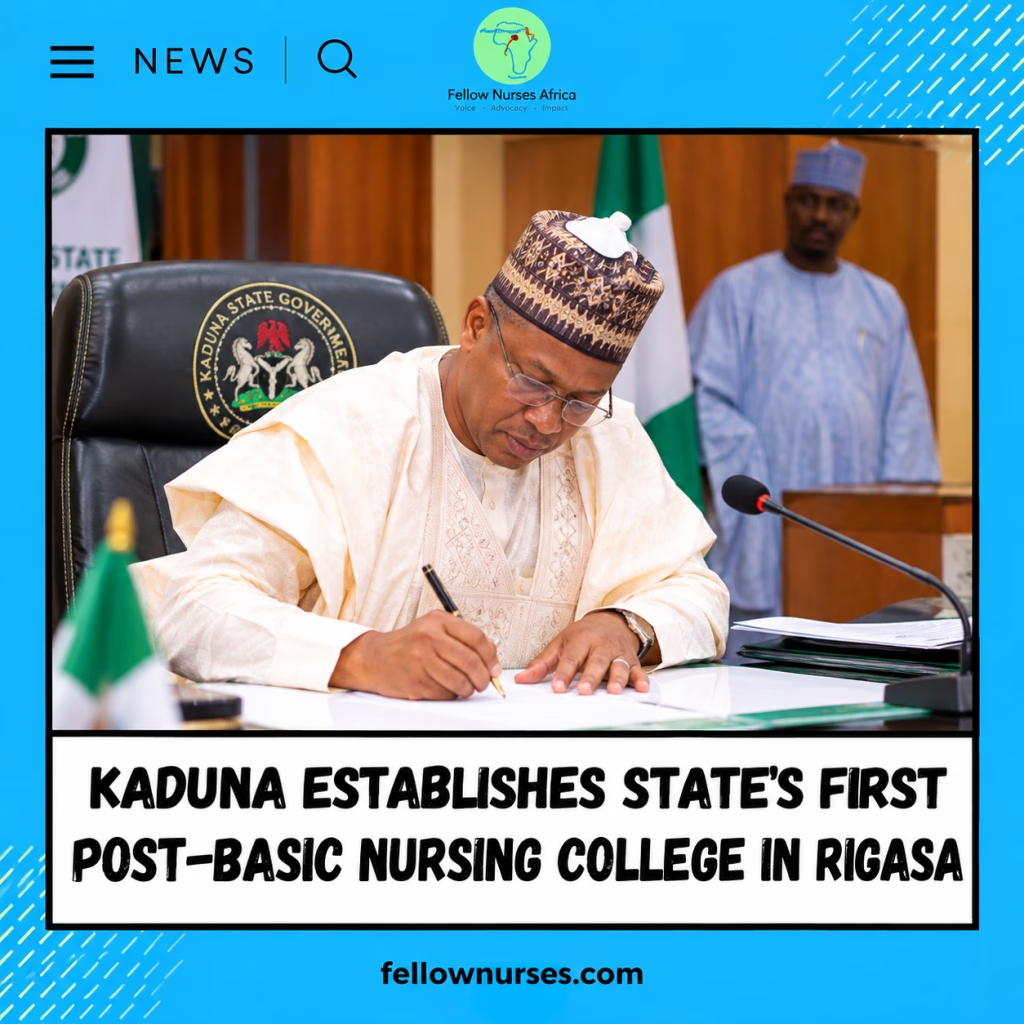
Governor Uba Sani has signed a law establishing a specialist nursing college to expand access to advanced training and address shortages of skilled nurses across Kaduna State.
👉 Join Fellow Nurses Africa on WhatsApp
Kaduna State has established a new College of Post-Basic Nursing Sciences in Rigasa, Igabi Local Government Area, in a move aimed at expanding specialist nursing education and strengthening the state’s healthcare workforce.
Governor Uba Sani signed the legislation into law, paving the way for the establishment of the institution, which is expected to train nurses in specialised clinical fields and improve access to advanced professional education.
The development was announced by the state Commissioner for Information and Culture, Ahmed Maiyaki, who described the college as an investment in skilled healthcare manpower and part of the government’s wider health sector reforms.
The institution was described by a Kaduna State lawmaker as the first of its kind in the state, with the potential to create new opportunities for nursing graduates who have had to travel outside Kaduna to pursue post-basic qualifications.
College to train specialist nurses
According to the state government, the college will offer specialised programmes in midwifery, psychiatric and mental health nursing, perioperative nursing, paediatric nursing, accident and emergency nursing, intensive care nursing, public health nursing and nursing administration.
These fields are important to the delivery of specialised healthcare services, particularly in maternal and child health, emergency care and the management of critically ill patients.
The institution is also expected to promote research, continuing professional development and partnerships with teaching hospitals, universities and other accredited healthcare and educational institutions.
Under the Kaduna State College of Post-Basic Nursing Sciences, Rigasa Law, 2026, the institution will operate as a specialised tertiary training college.
The legislation also provides for additional campuses, schools and training centres, subject to the relevant approvals.
A Governing Council will oversee the institution’s strategic direction, while an Academic Board will be responsible for academic standards, research and professional training.
The programmes will be subject to the accreditation and regulatory requirements of the Nursing and Midwifery Council of Nigeria and other relevant authorities.
Why the development matters for nursing education
The establishment of the college could improve access to specialist nursing education for qualified nurses in Kaduna State and neighbouring communities.
Post-basic nursing education enables eligible nurses to acquire additional knowledge and clinical competencies in specialised areas of practice.
Expanding access to this training may help address gaps in the availability of nurses with advanced clinical expertise.
For nurses who would otherwise need to relocate to another state to pursue further education, a local institution could reduce travel and accommodation costs, although the actual benefits will depend on its admission arrangements, programme availability and operational capacity.
The college could also strengthen the relationship between nursing education and healthcare workforce planning.
Training more specialist nurses is important, but the benefits will be greatest when educational opportunities are matched by adequate staffing, appropriate clinical placements, supportive working conditions and employment opportunities.
Accreditation and implementation will be critical
The announcement marks an important step towards expanding specialist nursing education in Kaduna State.
However, the institution’s long-term impact will depend on how effectively the law is implemented.
The next milestones will include establishing the necessary academic and administrative structures, securing relevant programme approvals, providing suitable clinical training facilities and communicating admission requirements to prospective students.
The state government has not confirmed an opening date or the commencement of admissions in the reports reviewed for this article.
The college forms part of Kaduna State’s broader healthcare reform agenda, which the government says includes upgrading 255 primary healthcare centres, rehabilitating 16 general hospitals and investing in the recruitment and development of healthcare workers.
For Nigeria’s nursing workforce, the development highlights the importance of creating more accessible pathways for professional advancement.
Its success will ultimately be measured not only by the number of nurses trained, but also by the quality of their education and the extent to which their specialist skills translate into improved patient care.
👉 Join Fellow Nurses Africa on WhatsApp
Fellow Nurses Africa is the independent voice of African nursing, we educate, inform and support nurses across Africa.

Durowoju Abisola is a registered nurse, nurse writer and On-Air Correspondent at Fellow Nurses Africa (FNA), passionate about nursing leadership, health education and advocacy.
Through journalism, storytelling and content creation, she amplifies important conversations around nursing, healthcare and the experiences of nurses in Nigeria. She is committed to using her voice and professional knowledge to educate the public, challenge misconceptions and inspire the next generation of nurses.