NMCN, ICRC Develop New De-escalation Course as Violence Threatens Safety of Nigerian Nurses
FNA NEWS, 8th Of October, 2026
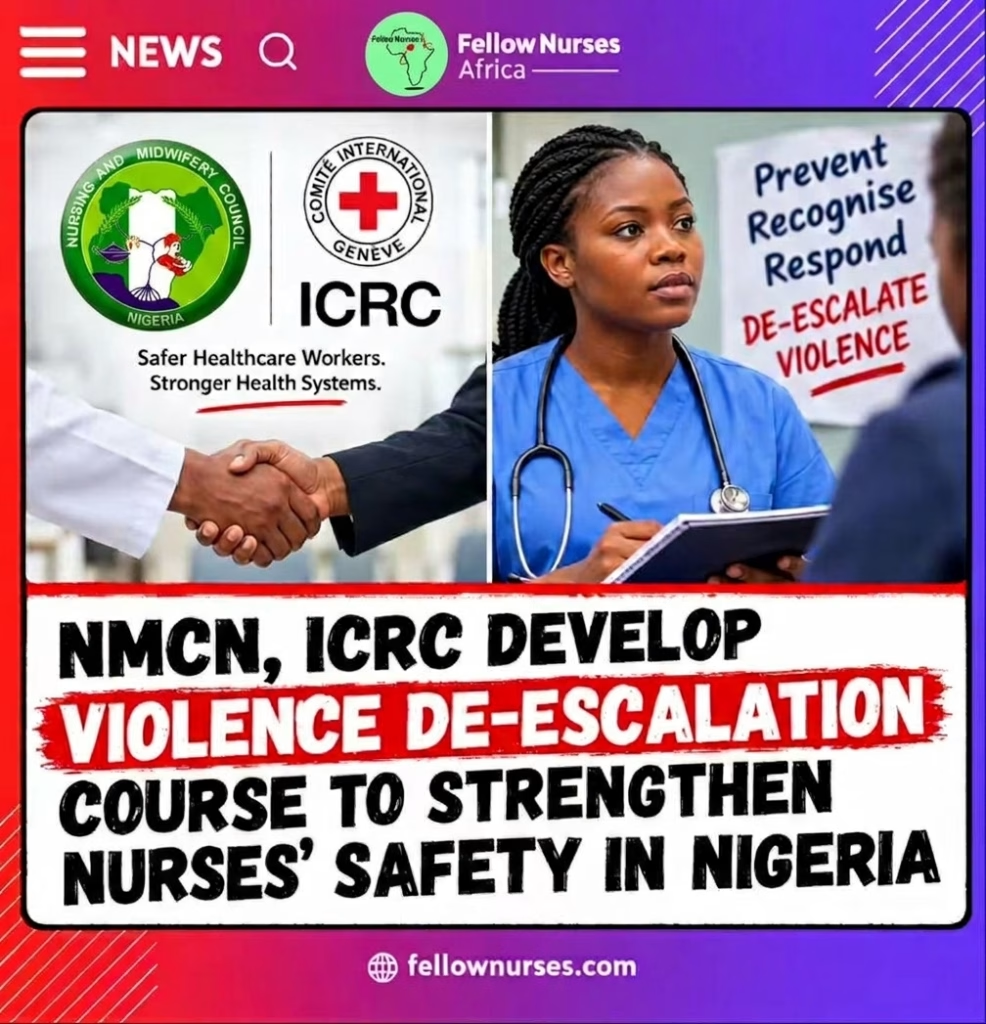
The Nursing and Midwifery Council of Nigeria (NMCN), with support from the International Committee of the Red Cross (ICRC), is developing a new Continuing Professional Development (CPD) course.
The course will help practising nurses prevent, recognise and safely respond to violence in healthcare settings.
The course aimed at helping practising nurses prevent, recognise and safely respond to violence in healthcare settings.
👉 Join Fellow Nurses Africa on WhatsApp
The initiative followed a three-day workshop in Abuja focused on developing a CPD course on De-escalation of Violence in Healthcare Settings. The course is specifically designed for practising nurses.
The collaboration comes amid growing concerns about aggression, threats, hostility, overcrowding and emotional distress in healthcare facilities. These conditions can increase the risk of violence.
According to ICRC Deputy Head of Delegation, James Matthews, the organisation’s support reflects its commitment to creating safer environments for healthcare workers, patients and communities.
He stressed that violence should not become an accepted feature of healthcare delivery.
Matthews explained that de-escalation goes beyond dealing with difficult behaviour. It involves effective communication, recognising early warning signs and taking appropriate action. It also means protecting healthcare workers while allowing them to continue providing care.
Why the course matters for nurses
Nurses often have prolonged and direct interactions with patients and their relatives. This can expose them to tense or potentially violent situations during routine care.
The NMCN Registrar and Chief Executive Officer, Dr Ndagi Alhassan, said healthcare workers can encounter aggression, threats, hostility, emotional distress, overcrowding and conflict in healthcare facilities.
He said these realities make it necessary for nurses and midwives to develop effective communication and intervention skills. They must also be able to identify warning signs before situations escalate.
Alhassan also called on regulators, educators, healthcare institutions and professionals to share responsibility for ensuring that nurses and midwives are adequately prepared to provide care safely in challenging environments.
The ICRC’s Humanitarian Affairs Advisor for its Protection of Healthcare Programme in Nigeria, Juliet Unubi, described the initiative as the next step following the integration of a Protection of Healthcare module into nursing education.
She said the CPD initiative will give practising nurses practical tools to recognise warning signs and communicate effectively. It will also help them respond safely and know when to seek additional support.
From awareness to practical skills
👉 Join Fellow Nurses Africa on WhatsApp
The development of the Nigerian CPD course builds on the ICRC’s broader work on protecting healthcare workers and healthcare delivery from violence.
The ICRC already has a dedicated de-escalation training package designed to help healthcare workers recognise tense situations early and prevent them from developing into violence.
Its training approach includes communication skills, identifying warning signs and practical responses, including role-playing exercises.
The organisation’s recent work in Nigeria also shows that de-escalation is not an entirely new area of intervention. ICRC’s Nigeria reporting states that the ICRC trained 125 healthcare community members in de-escalation techniques.
To address reactive violence in hospital settings, as part of work carried out with the Nigerian Red Cross Society.
The NMCN-supported CPD course could move the conversation beyond general awareness of healthcare violence. It could provide a structured response tailored to Nigerian nurses.
But training alone cannot make healthcare workers safe
The development of a de-escalation course is significant, but it should not be interpreted as placing the responsibility for preventing violence solely on nurses.
A nurse can be trained to recognise warning signs and communicate effectively. But healthcare institutions also need systems to protect staff when situations become unsafe.
These include appropriate security arrangements, clear escalation procedures and effective incident reporting systems. Adequate staffing, communication channels and institutional responses to threats and assaults are also important.
Research examining workplace violence in Nigerian healthcare settings has similarly identified the need for interventions that combine staff training with facility-level measures, including security personnel, surveillance and improvements to processes that can contribute to patient frustration.
This distinction is important.
De-escalation training should empower nurses not become a substitute for institutional responsibility.
A potential step forward for nursing safety
The three-day workshop is expected to contribute to a sustainable CPD module that strengthens nurses’ skills in communication, early identification of risk, prevention, intervention and referral.
For a profession that operates at the frontline of patient care, the development of such a course could represent an important step towards preparing nurses not only to deliver care,
but to recognise and respond appropriately when the environment around them becomes unsafe.
The larger question now is how the final CPD course will be implemented across Nigeria,
who will have access to it, whether it will become part of routine professional development, and what institutional measures will accompany the training.
Because nurses should not have to choose between providing care and protecting themselves from violence.
👉 Join Fellow Nurses Africa on WhatsApp
Fellow Nurses Africa is the independent voice of African nursing, we educate, inform and support nurses across Africa.

Durowoju Abisola is a registered nurse, nurse writer and On-Air Correspondent at Fellow Nurses Africa (FNA), passionate about nursing leadership, health education and advocacy.
Through journalism, storytelling and content creation, she amplifies important conversations around nursing, healthcare and the experiences of nurses in Nigeria. She is committed to using her voice and professional knowledge to educate the public, challenge misconceptions and inspire the next generation of nurses.