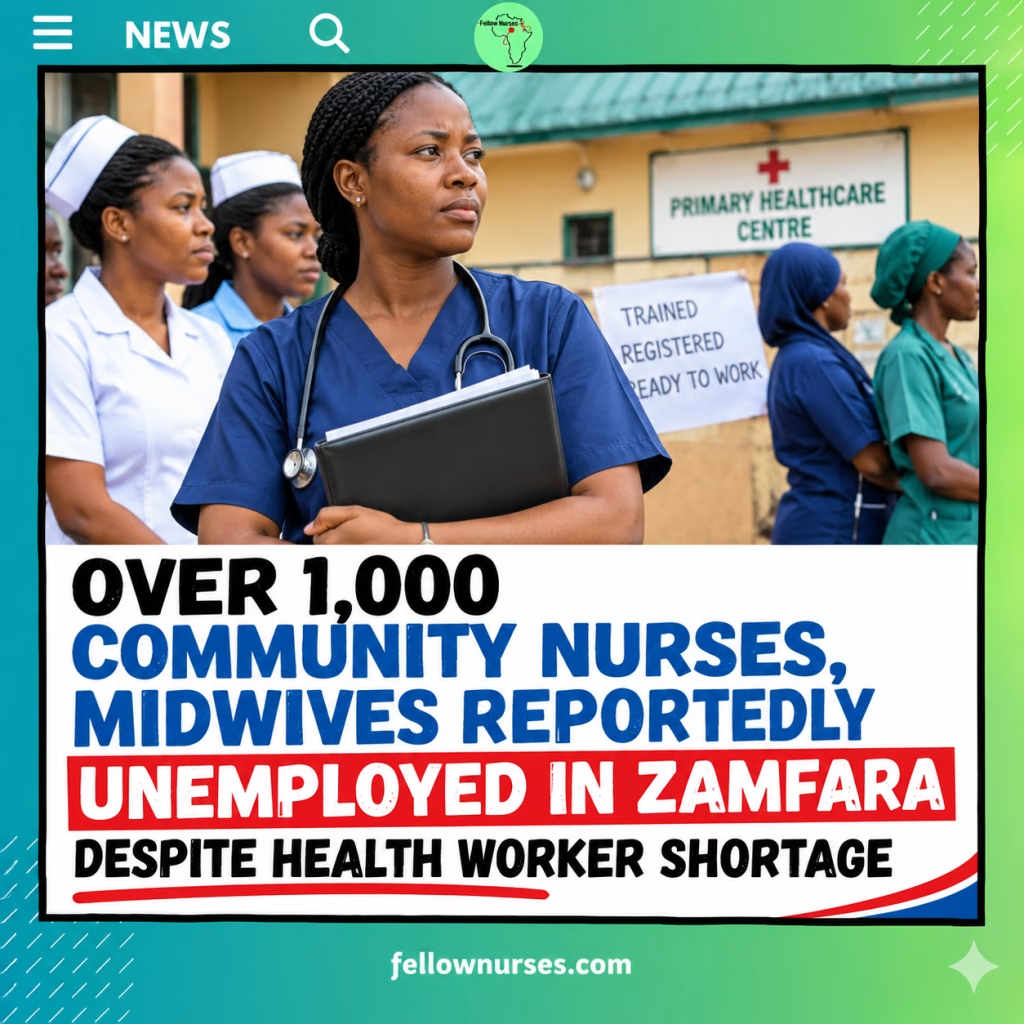
Over 1,000 Community Nurses, Midwives Reportedly Unemployed in Zamfara Despite Health Worker Shortage
FNA NEWS, 6th of October, 2026
More than 1,000 professionally registered Community Nurses and Community Midwives in Zamfara State are reportedly without employment, even as primary healthcare facilities across the state continue to face shortages of health personnel.
👉 Join Fellow Nurses Africa on WhatsApp
The situation has raised concerns about the gap between the production of trained health professionals and their absorption into the healthcare system, particularly at the primary healthcare level where community-based nurses and midwives are expected to play a frontline role.
The affected professionals say they have completed their training, obtained professional registration and are ready to work, but have struggled to secure employment through state recruitment exercises.
Qualified professionals reportedly left without jobs
According to the report, more than 1,000 professionally registered Community Nurses and Community Midwives in Zamfara remain unemployed.
Some of the affected professionals are reportedly volunteering in primary healthcare facilities, providing services despite not being formally employed or placed on the government payroll.
The situation is particularly concerning because the professionals were trained specifically to deliver healthcare services within communities and at the primary healthcare level.
One resident quoted in the report said some unemployed graduates had continued to volunteer at health centres because they wanted to serve their communities despite having no formal employment.
The affected professionals have also alleged that they were not adequately considered during recent recruitment exercises.
They said they had previously been told that their employment would be addressed through the primary healthcare system but remained excluded from relevant recruitment arrangements.
The contradiction at the heart of the issue
The reported unemployment comes against the backdrop of an acknowledged health workforce shortage in Zamfara.
The state’s own Human Resources for Health Costed Recruitment Plan 2025–2030 identifies significant shortages and inequitable distribution of doctors, nurses, midwives and other health professionals.
The document specifically notes that the availability of health workers at primary healthcare facilities is vital to improving health outcomes, reducing morbidity and mortality and advancing universal health coverage.
This creates a significant question for policymakers:
If trained and professionally registered community nurses and midwives are available, why are some reportedly unemployed while health facilities continue to experience staffing gaps?
The issue is therefore not simply about employment.
It is also about workforce planning, deployment and the effective use of Nigeria’s existing health workforce.
Zamfara has announced plans to recruit more health workers
👉 Join Fellow Nurses Africa on WhatsApp
There have been efforts by the Zamfara State Government to address its health workforce needs.
In February 2026, the state announced plans to recruit more than 1,400 health workers. The plans included 631 medical personnel, mainly nurses and midwives, for general hospitals, as well as an additional 800 health workers for primary healthcare centres.
The state government has also said Governor Dauda Lawal approved the recruitment of 800 midwives, nurses and community health workers as part of efforts to strengthen manpower.
In June, Zamfara opened a recruitment portal for nurses and midwives, while the state’s Hospital Service Management Board subsequently conducted a Computer-Based Test for applicants. The board described the exercise as part of efforts to strengthen healthcare delivery and said recruitment would be based on established requirements.
These measures suggest that the government recognises the need for additional health workers.
However, the reported experience of the more than 1,000 Community Nurses and Community Midwives raises questions about how these recruitment programmes are being implemented and whether the available workforce is being adequately matched with existing vacancies.
A primary healthcare workforce cannot be treated as an afterthought
Community Nurses and Community Midwives occupy an important position in grassroots healthcare delivery.
Their work brings essential services closer to communities, particularly populations that may face difficulties accessing larger hospitals.
At the primary healthcare level, nurses and midwives can contribute to maternal and newborn care, health education, preventive services, community outreach and early identification of conditions requiring referral.
This makes effective recruitment and deployment particularly important in rural and underserved communities.
A recent discussion among Nigerian health experts similarly highlighted the country’s broader problem of unequal health-worker distribution, with rural postings, infrastructure, remuneration and retention identified as major barriers to ensuring that professionals are available where they are most needed. The challenge, therefore, is not simply producing more health workers.
It is ensuring that trained professionals are absorbed, properly deployed, adequately supported and retained in the communities that need them most.
What the affected nurses and midwives are asking for
The affected professionals say they are not asking for preferential treatment.
Their demand, according to the report, is for a fair opportunity to practise their professions and contribute to healthcare delivery in Zamfara.
They have called on the state government to clarify its employment policy for Community Nurses and Community Midwives and explain how the professionals will be incorporated into the state’s primary healthcare workforce.
They also say they have made efforts to seek clarification from relevant government offices, including through correspondence and meetings with authorities.
For the professionals involved, the uncertainty has consequences beyond unemployment.
Years of education, professional training and registration represent an investment in the state’s health workforce. When qualified professionals remain outside the formal system, both the workers and the communities they were trained to serve potentially lose out.
The bigger question for Zamfara
👉 Join Fellow Nurses Africa on WhatsApp
Zamfara’s workforce challenge illustrates a wider problem facing Nigeria’s health sector: a health workforce crisis is not always caused by a lack of trained professionals alone.
It can also be caused by the inability of health systems to absorb, deploy and retain the professionals already available.
The state’s own recruitment plan recognises the importance of addressing shortages, particularly in rural and underserved areas, while incorporating recruitment, deployment and retention strategies.
The reported situation involving more than 1,000 Community Nurses and Community Midwives therefore deserves a clear and transparent response.
If there are genuine vacancies at the primary healthcare level, policymakers need to explain how qualified professionals can be effectively matched to those vacancies.
If recruitment has already taken place, there should be clarity on the number of Community Nurses and Community Midwives recruited, the number still awaiting employment and the criteria used to determine successful candidates.
And where professionals are volunteering in public health facilities, their status and the safeguards surrounding such arrangements also deserve attention.
Fellow Nurses Africa’s position
For Fellow Nurses Africa, the issue goes beyond the question of individual employment.
Nigeria cannot afford a situation where qualified nurses and midwives are left without opportunities to practise while communities simultaneously struggle to access adequate healthcare personnel.
The solution requires more than announcing recruitment figures. It requires transparent workforce planning, credible recruitment processes, equitable deployment and sustainable funding.
The Zamfara State Government should provide clarity on the reported unemployment of Community Nurses and Community Midwives and demonstrate how its recruitment and primary healthcare workforce plans will address the gap.
For the affected professionals, the message is simple: they trained to serve, they are professionally registered, and they deserve a fair opportunity to do so.
For the communities they were trained to serve, the stakes are even higher.
A trained health worker sitting at home and an understaffed health facility serving a community are not two separate problems. They may be symptoms of the same workforce-planning failure.
👉 Join Fellow Nurses Africa on WhatsApp
Fellow Nurses Africa is the independent voice of African nursing, we educate, inform and support nurses across Africa.

Durowoju Abisola is a registered nurse, nurse writer and On-Air Correspondent at Fellow Nurses Africa (FNA), passionate about nursing leadership, health education and advocacy.
Through journalism, storytelling and content creation, she amplifies important conversations around nursing, healthcare and the experiences of nurses in Nigeria. She is committed to using her voice and professional knowledge to educate the public, challenge misconceptions and inspire the next generation of nurses.