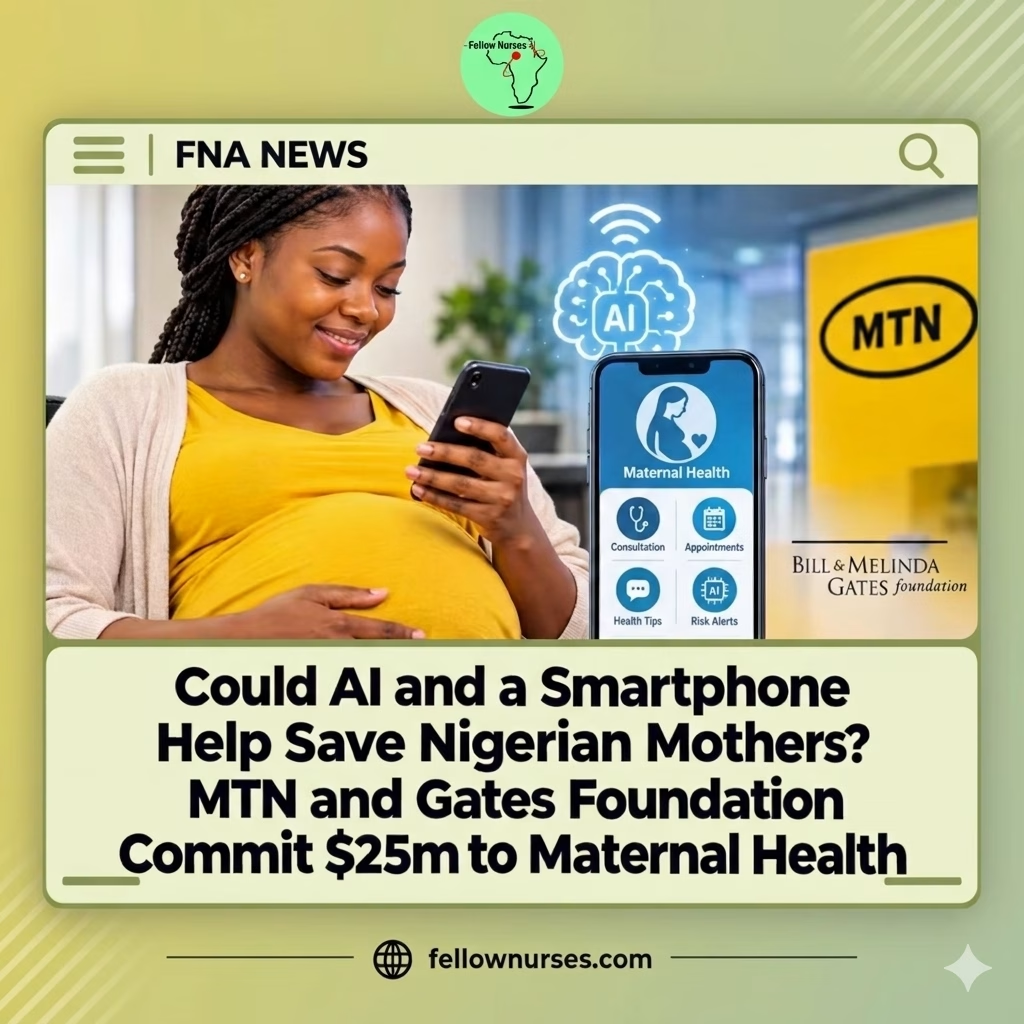
Could AI and a Smartphone Help Save Nigerian Mothers? MTN and Gates Foundation Commit $25m to Maternal Health
FNA NEWS, 24th Of September, 2026
A smartphone may soon become more than a tool for communication for thousands of pregnant women in Nigeria.
👉 Join Fellow Nurses Africa on WhatsApp
The MTN Group Foundation and the Gates Foundation have announced a four-year, approximately $25 million partnership aimed at improving maternal healthcare in Nigeria through artificial intelligence, affordable smartphones, mobile data and better connectivity.
Called the Nigeria Maternal Health Multiplier, the initiative aims to help 500,000 women access trusted maternal-health guidance, equip 5,000 frontline health workers with digital tools to identify complications earlier, and support 500 health facilities by 2030.
The announcement comes as Nigeria continues to face a significant maternal-health challenge, with the country accounting for more than a quarter of estimated global maternal deaths.
Why AI is being introduced into maternal healthcare
The programme is built around a simple idea: getting the right information to women and healthcare workers early enough may help improve the response to pregnancy and childbirth complications.
Under the initiative, pregnant women and frontline health workers will have access to AI-enabled, phone-based decision-support tools. The programme will also provide affordable smartphones and mobile data to women, while improving connectivity at participating primary healthcare facilities.
For frontline health workers, the tools are intended to provide access to real-time guidance that can support the recognition of warning signs during pregnancy and childbirth.
For women, the programme aims to make trusted health information more accessible throughout pregnancy, childbirth and the postnatal period.
The organisations say the platform will particularly focus on underserved communities, where access to healthcare information, connectivity and quality services can be more difficult.
Nigeria’s maternal health burden
The scale of the problem helps explain why the initiative is focusing on Nigeria.
The World Health Organization’s latest estimates put Nigeria’s 2023 maternal mortality ratio at 993 deaths per 100,000 live births, with an uncertainty interval of 718 to 1,540. WHO also estimates that Nigeria recorded approximately 75,000 maternal deaths in 2023, representing 28.7% of estimated maternal deaths globally.
The figures are particularly significant because many maternal deaths are preventable when women can access timely, quality care and skilled health professionals.
WHO notes that skilled healthcare before, during and after childbirth can save women’s lives.
The MTN-Gates initiative also points to antenatal-care access as part of the challenge. According to the organisations, only 59% of Nigerian women complete four or more antenatal care visits, meaning some warning signs may not be detected early enough.
What the $25 million will support
👉 Join Fellow Nurses Africa on WhatsApp
The four-year commitment, running from 2026 to 2030, combines direct and in-kind contributions from MTN and the Gates Foundation.
The programme has three major components.
AI-enabled decision support: Digital tools will provide guidance to mothers and frontline health workers.
Affordable smartphones and data: Pregnant women will receive greater access to phones and mobile data, reducing some of the financial barriers to using digital health services.
Improved connectivity: Participating primary healthcare facilities will receive improved connectivity to support digital healthcare delivery.
The organisations hope that connecting these three elements will create a digital link between women, healthcare workers and health facilities.
Why nurses and other frontline health workers matter
For nurses and midwives, the development is particularly relevant.
Technology may provide information, reminders or decision-support, but maternal healthcare still depends heavily on the healthcare professionals who assess patients, recognise deterioration, provide treatment and make referrals.
The new initiative specifically targets 5,000 frontline health workers, placing healthcare workers at the centre of its digital-health model rather than treating technology as a replacement for them.
This is also consistent with the Federal Government’s current focus on strengthening primary healthcare and improving maternal and newborn health services.
In September, the Federal Ministry of Health and Social Welfare said its Maternal and Neonatal Mortality Reduction Innovation Initiative (MAMII) was targeting 172 local government areas across 33 states. The ministry said these areas account for approximately 55% of maternal deaths and reported that more than 250 health facilities were implementing the initiative at the time of its update.
The MTN-Gates programme is designed to complement this existing government effort rather than operate separately from it.
But can a smartphone really save a mother’s life?
👉 Join Fellow Nurses Africa on WhatsApp
This is where the promise of the initiative needs to be viewed carefully.
A smartphone cannot treat severe bleeding. AI cannot perform an emergency Caesarean section. A digital platform cannot replace blood supplies, skilled birth attendants, functioning referral systems or adequately equipped health facilities.
What technology can potentially do is help close part of the information and communication gap.
If a frontline health worker can access relevant guidance earlier, or a woman receives reliable information that prompts her to seek care sooner, technology could become one part of a wider chain of interventions.
But the success of the programme will ultimately depend on how well the digital tools work within the health system around them.
Questions around clinical safety, data privacy, digital literacy, language, internet availability and the appropriate limits of AI in clinical decision-making will also matter.
The Gates Foundation itself says AI’s potential in healthcare depends on ensuring that its benefits reach people who need them most.
The bigger picture for Nigerian healthcare
The initiative reflects a broader shift in how technology is being considered within healthcare delivery.
Rather than presenting AI as a replacement for healthcare professionals, the Nigeria Maternal Health Multiplier is being positioned as a tool that connects patients, frontline workers and health facilities.
That distinction matters.
Nigeria’s maternal-health challenge is not caused by a single problem. It involves access to antenatal care, skilled delivery, emergency obstetric services, transportation, health infrastructure, workforce availability, affordability and timely recognition of complications.
Digital technology may address some of these gaps, but it cannot address all of them on its own.
The real test will therefore not simply be how many smartphones are distributed or how many people use an AI tool.
It will be whether those tools help women reach appropriate care earlier, help frontline workers recognise complications sooner, and ultimately contribute to safer pregnancies and childbirth.
For a country carrying almost 29% of the world’s estimated maternal deaths, the stakes are considerable.
And by putting both technology and frontline healthcare workers at the centre of the intervention, the $25 million initiative will provide an important test of how digital health can be integrated into Nigeria’s maternal healthcare system.
👉 Join Fellow Nurses Africa on WhatsApp
Fellow Nurses Africa is the independent voice of African nursing, we educate, inform and support nurses across Africa.

Durowoju Abisola is a registered nurse, nurse writer and On-Air Correspondent at Fellow Nurses Africa (FNA), passionate about nursing leadership, health education and advocacy.
Through journalism, storytelling and content creation, she amplifies important conversations around nursing, healthcare and the experiences of nurses in Nigeria. She is committed to using her voice and professional knowledge to educate the public, challenge misconceptions and inspire the next generation of nurses.