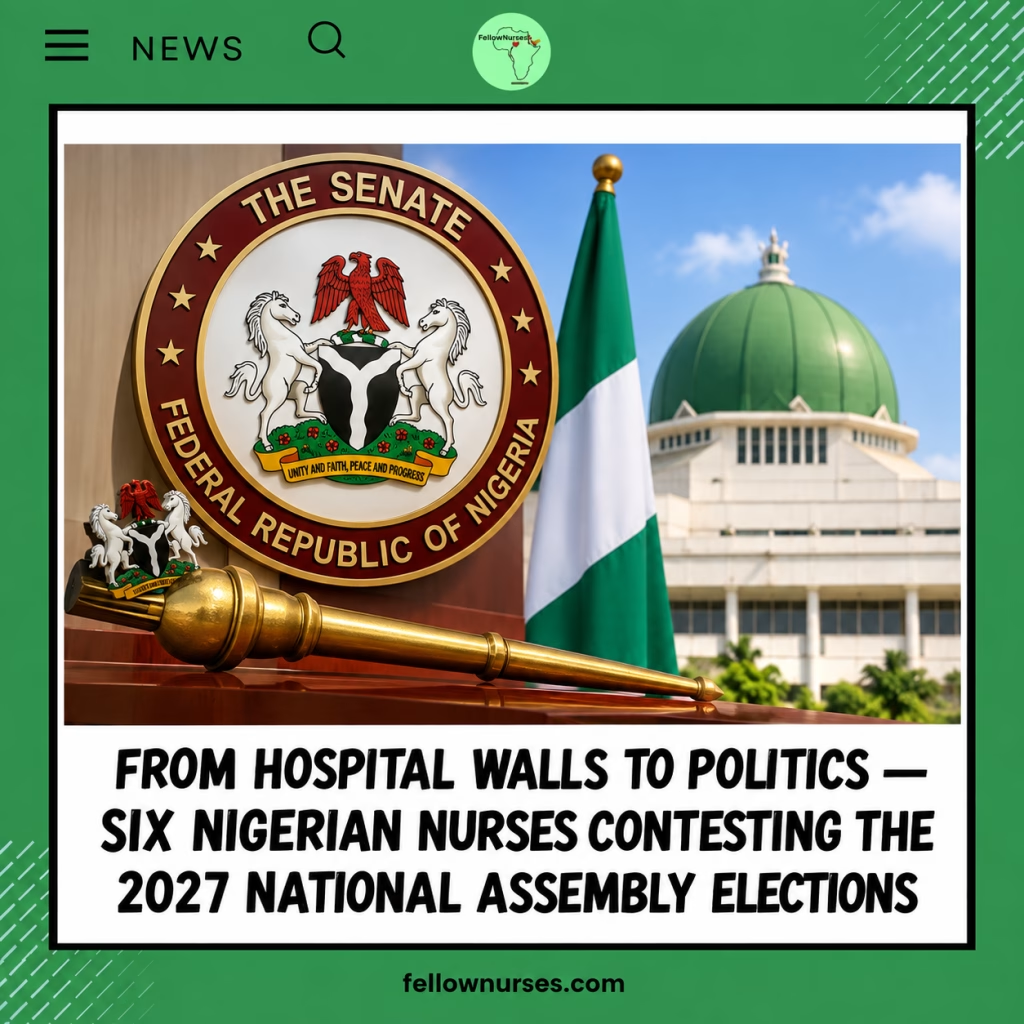
From Hospital walls to Politics — Six Nigerian Nurses Contesting the 2027 National Assembly Elections
FNA NEWS, LAGOS NIGERIA, 14th of September,2026
For decades, the nursing profession in Nigeria has been closely associated with hospital wards, community health centres, maternity units and the bedside.
👉 Join Fellow Nurses Africa on WhatsApp
But as Nigeria approaches the 2027 general elections, some nurses are looking beyond the clinical environment and towards the political arena.
Six nurses and midwives have been identified by Fellow Nurses Africa as seeking seats in the National Assembly, marking an increasingly visible attempt by healthcare professionals to move from caring for patients to participating directly in the political process.
The 2027 Presidential and National Assembly elections are scheduled for February 20, 2027, according to the Independent National Electoral Commission (INEC).
From the ward to the legislature
The nurses identified include one senatorial aspirant and five candidates seeking seats in the House of Representatives.
👉 Join Fellow Nurses Africa on WhatsApp
For the Senate, Dr Ayenioye Olabisi is listed as a PDP candidate for Ekiti South. Her qualifications include nursing training alongside postgraduate education up to PhD level.
Nr Tangwami Felix Bilishan, listed under the APC in Adamawa South, is also identified as a senatorial candidate, with qualifications including Registered Nursing, a degree in Political Science and a Master of Public Administration.
The House of Representatives candidates include Nr Nwosu Adaku Bridget, listed under the Labour Party for the Etche/Omuma constituency in Rivers State; Nr Idris Bello Idris, listed under the ADC for Birnin Kudu/Buji in Jigawa State; Nr Umoh Esther, listed under the PDP for Ikot Abasi/Mkpat Enin in Akwa Ibom State; and Nr Kamalu Justina, listed under the NDP for Aboh Mbaise/Ngor Okpala in Imo State.
Their backgrounds vary, but they share something significant: professional experience within nursing and healthcare.
Why does it matter?
Nurses are among the healthcare professionals closest to patients.
They see what happens when hospitals lack essential medicines. They witness the consequences of staff shortages, delayed referrals, poor infrastructure and financial barriers to care. They also work directly with mothers, newborns, children, older people and families navigating Nigeria’s health system.
Yet clinical experience does not automatically translate into political influence.
Many decisions affecting healthcare workers and patients are made through legislation, government policy and public spending. Issues such as workforce planning, health insurance, nursing education, remuneration, primary healthcare and patient safety ultimately require political decisions.
That makes the growing interest of nurses in politics worth watching.
When healthcare professionals enter the legislature, they bring a perspective shaped by direct contact with the realities of the health system.
But there is an important distinction.
Being a nurse does not automatically make someone a good politician, just as being a politician does not automatically make someone an effective healthcare advocate.
The real question is what candidates do with their professional experience once they enter public office.
Beyond representation
The political participation of nurses should therefore be viewed as more than a question of professional pride.
It raises a bigger question about representation.
Who speaks for healthcare workers when policies affecting their working conditions are debated? Who brings the realities of understaffed facilities into legislative conversations? Who understands the difference between a policy that looks good on paper and one that can actually work at the bedside?
Nurses who enter politics will face the same scrutiny as every other candidate.
Their professional background may give them valuable insight, but voters will ultimately judge them on competence, integrity, policy positions, leadership and their ability to represent their constituencies.
For the nursing profession, however, their presence in the political arena could still be significant.
A new career path for nurses?
👉 Join Fellow Nurses Africa on WhatsApp
Nursing has traditionally been viewed through a clinical lens. But modern nursing extends far beyond bedside care.
Nurses already work in education, research, administration, public health, advocacy, entrepreneurship and health policy.
Politics could become another frontier.
The emergence of nurses on the 2027 political landscape may therefore represent more than six individual career choices. It could signal a growing recognition that nurses have a place not only in hospitals and communities, but also in the rooms where decisions about those systems are made.
The challenge now is whether these candidates can translate their clinical experience into effective public leadership.
For a profession that spends its career advocating for patients, the move into politics presents an opportunity to advocate at another level.
From scrubs to politics, the question is no longer whether nurses belong in leadership. It is what they will do when they get there.
👉 Join Fellow Nurses Africa on WhatsApp
Fellow Nurses Africa is the independent voice of African nursing, we educate, inform and support nurses across Africa.

Durowoju Abisola is a registered nurse, nurse writer and On-Air Correspondent at Fellow Nurses Africa (FNA), passionate about nursing leadership, health education and advocacy.
Through journalism, storytelling and content creation, she amplifies important conversations around nursing, healthcare and the experiences of nurses in Nigeria. She is committed to using her voice and professional knowledge to educate the public, challenge misconceptions and inspire the next generation of nurses.