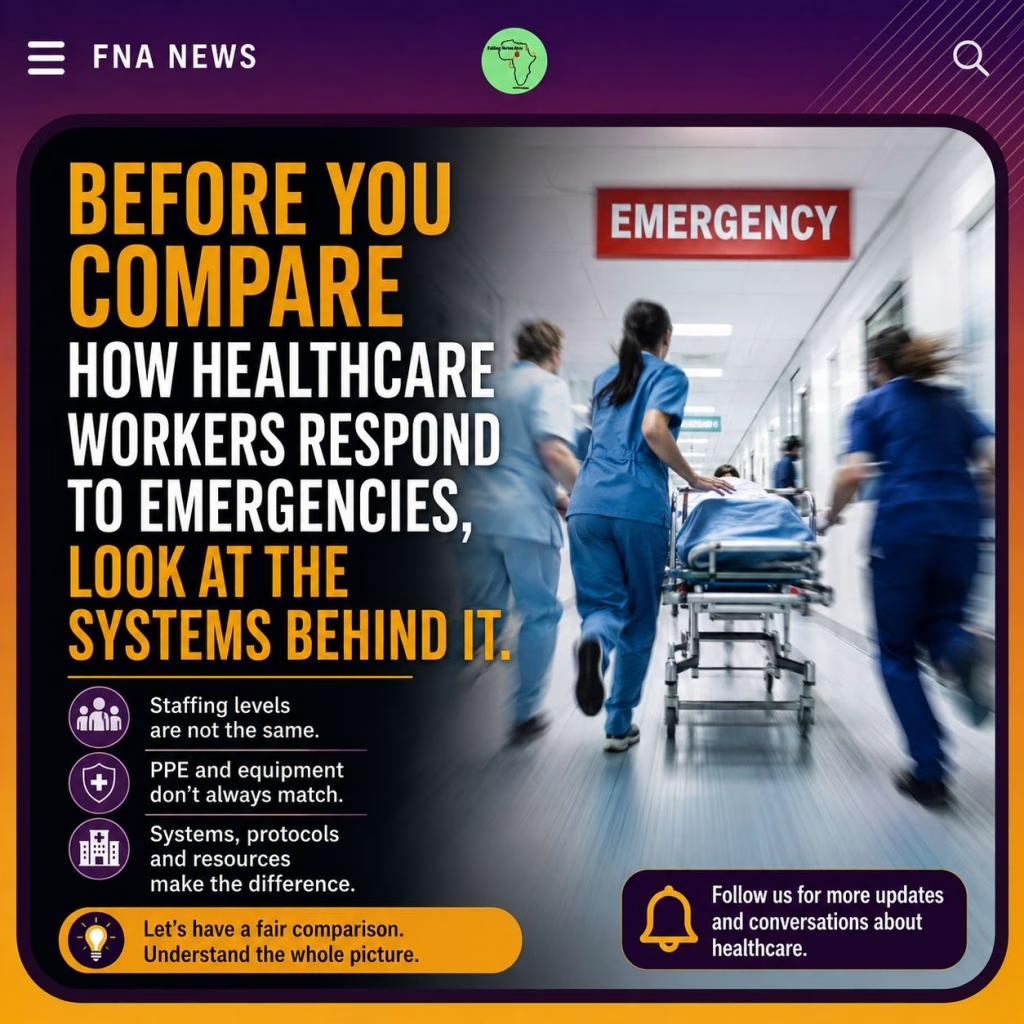
Before Comparing How Healthcare Workers Respond to Emergencies, Look at the Systems Behind Them
FNA NEWS, 1st Of September 2026
A video circulating on social media has drawn attention to the way healthcare workers respond when an emergency occurs.
The comparison is straightforward: healthcare workers in other countries are shown moving quickly when an emergency is announced, with several members of the medical team immediately responding to the situation. The Nigerian side is presented in contrast.
👉 Join Fellow Nurses Africa on WhatsApp
The message appears to be that healthcare workers in other countries are more prepared, faster to respond and more organised during emergencies.
There is certainly value in examining how quickly hospitals respond to emergencies. In a critical situation, every second can matter.
But there is another question worth asking:
What makes that rapid response possible, It is not just about the healthcare worker?
When several healthcare workers immediately respond to an emergency, it can look like a demonstration of individual professionalism and efficiency.
And sometimes it is, but emergency response is also a reflection of the system in which those healthcare workers operate.
Look closely at some of these videos and you may notice something else: multiple members of staff responding at the same time, appropriate protective equipment already available and equipment positioned for immediate use.
That matters.
A healthcare worker can only respond effectively within the resources and staffing available to them.
How many people are available?
One of the easiest things to overlook in a viral comparison is the number of healthcare workers on the floor.
If an emergency occurs and a team of nurses, doctors and other healthcare professionals can immediately respond, the workload can be shared.
But what happens when there are fewer people available?
Nigeria continues to face significant health workforce challenges, including shortages, uneven distribution of workers and difficulties retaining staff. The World Health Organization has identified shortages and unequal distribution of health workers as major challenges across the African region.
That means the question should not simply be:
“Why aren’t Nigerian healthcare workers responding like this?”
It should also be:
“Does the Nigerian healthcare worker have the same number of colleagues available to respond?”
What about the equipment?
There is another detail that deserves attention: protective equipment.
In many emergency-response scenes, healthcare workers can be seen putting on or already wearing gloves and other protective equipment.
👉 Join Fellow Nurses Africa on WhatsApp
This may seem like a small detail, but it is not.
Healthcare workers need to protect themselves while protecting patients.
In some Nigerian healthcare settings, however, staff may face situations where essential supplies are limited or inconsistent.
That does not mean every Nigerian hospital lacks these resources. It means that healthcare workers cannot be expected to reproduce the same response when the resources available to them are different.
You cannot compare the performance of two teams while ignoring the tools they have been given.
Speed matters but so does the system
There is nothing wrong with expecting Nigerian healthcare workers to respond quickly to emergencies.
In fact, Nigerian healthcare professionals should have access to systems that allow them to do exactly that.
Hospitals need clear emergency protocols, adequate staffing, appropriate equipment, reliable supplies and well-coordinated teams.
When those things are in place, healthcare workers are better positioned to respond quickly and effectively.
So the conversation should not be about whether Nigerian healthcare workers are capable of being fast.
The more important question is whether the healthcare system consistently gives them the conditions required to be fast.
A viral video cannot tell the whole story
Social media comparisons can be powerful because they turn complicated issues into a few seconds of footage.
One team runs, another team responds differently.
But healthcare systems are not identical.
Countries differ in their staffing levels, hospital infrastructure, funding, emergency protocols, equipment and working conditions.
👉 Join Fellow Nurses Africa on WhatsApp
Comparing the final response without considering those differences can create an unfair picture of the healthcare workers themselves.
And this is not an argument against learning from other countries.
Nigeria can and should learn from healthcare systems that have developed effective emergency-response models.
The question is how to create the conditions that allow those models to work here, Nigerian healthcare workers deserve the same opportunity to succeed
If we want Nigerian healthcare workers to respond with speed, coordination and confidence during emergencies, then the system must support them with the resources to do so.
Give them enough hands.
Give them the necessary equipment.
Give them adequate protective supplies.
Give them functional emergency systems.
Give them the working environment required to perform at their best.
Then we can have a fair conversation about performance.
Because a healthcare worker’s response is not determined by training alone. The system around that healthcare worker matters too.
let’s admire healthcare teams that respond quickly to emergencies.
Let’s learn from what they do well.
👉 Join Fellow Nurses Africa on WhatsApp
Fellow Nurses Africa is the independent voice of African nursing, we educate, inform and support nurses across Africa.

Durowoju Abisola is a registered nurse, nurse writer and On-Air Correspondent at Fellow Nurses Africa (FNA), passionate about nursing leadership, health education and advocacy.
Through journalism, storytelling and content creation, she amplifies important conversations around nursing, healthcare and the experiences of nurses in Nigeria. She is committed to using her voice and professional knowledge to educate the public, challenge misconceptions and inspire the next generation of nurses.