One Nurse, 18 Newborns: OOUTH Staffing Concerns Raise Patient Safety Questions
by FNA NEWS, 2nd of September 2026
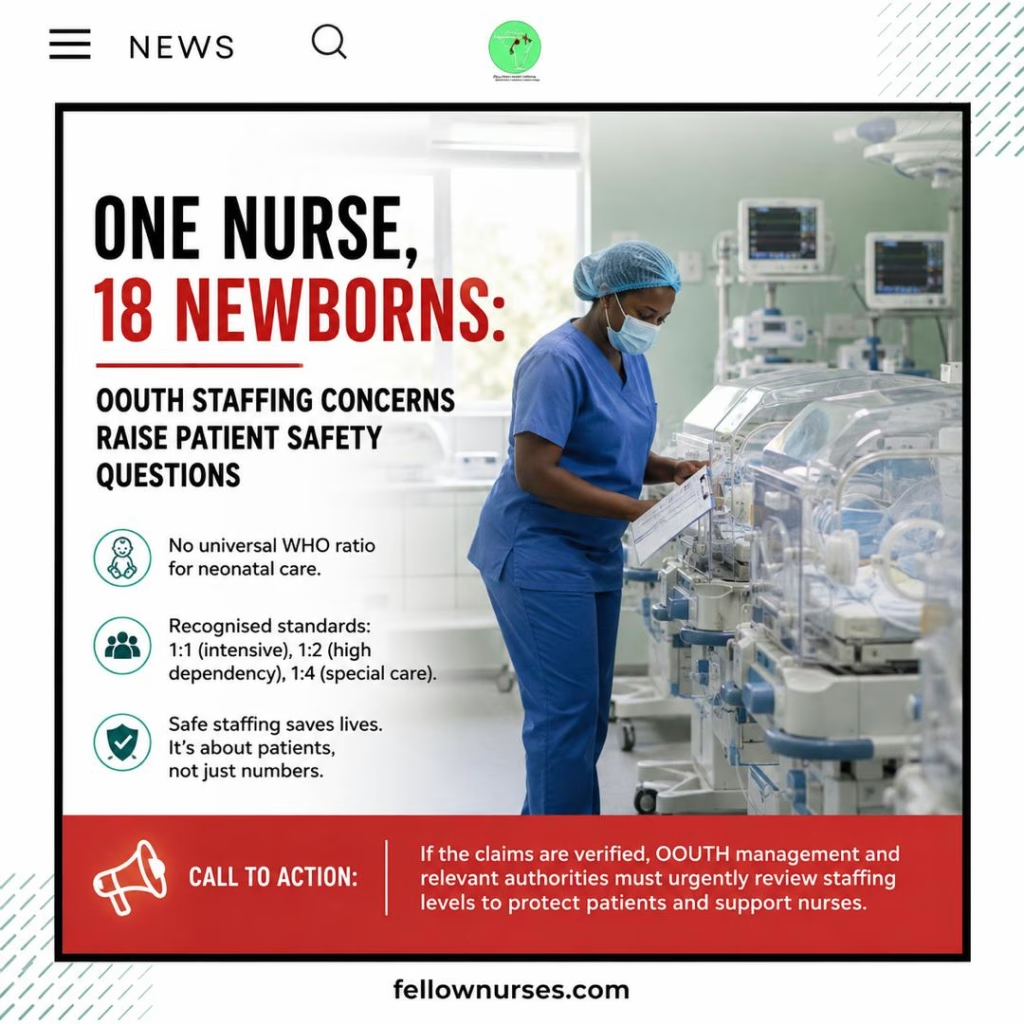
A social media post alleging that one nurse was left caring for as many as 18 neonates at Olabisi Onabanjo University Teaching Hospital (OOUTH), Sagamu, has sparked concerns about nurse staffing, workload and patient safety.
👉 Join Fellow Nurses Africa on WhatsApp
The post claimed that some of the babies were on CPAP, under radiant warmers or critically ill, with very few nurses available to provide care.
Fellow Nurses Africa has not independently verified the specific staffing figures in the post. However, the allegation raises an important question: when does workload become unsafe?
There is no single ratio for every patient
WHO does not prescribe one universal nurse-to-patient ratio for hospitals. Instead, WHO’s 2026 guidance on safe nurse staffing emphasises having the right number and mix of nurses based on patient needs, workload and the care setting.
For neonatal care, recognised standards provide useful benchmarks. UK neonatal standards recommend approximately 1 nurse to 1 baby for intensive care, 1:2 for high-dependency care and 1:4 for special care.
Adult wards are different. A single ratio cannot safely apply to every adult patient because a stable medical patient and a critically ill ICU patient have very different nursing needs.
The principle is simple: staffing should match patient acuity.
The OOUTH concern goes beyond one viral post
👉 Join Fellow Nurses Africa on WhatsApp
The issue also comes against the backdrop of concerns previously raised by resident doctors at OOUTH.
In June 2026, the hospital’s resident doctors embarked on a 10-day warning strike, citing acute manpower shortages, excessive workload, burnout and prolonged working hours, alongside welfare and training concerns. The action was later suspended following intervention and assurances from the Ogun State Government.
This does not prove the staffing claims currently circulating about the neonatal unit. But it does make the broader conversation about workforce capacity and working conditions at the hospital worth examining.
What should happen next?
If the claims about the neonatal unit are verified, OOUTH management and the relevant health authorities should urgently review the staffing levels, patient acuity and workload on the affected unit.
Adequate staffing is not a luxury. It is part of safe healthcare.
👉 Join Fellow Nurses Africa on WhatsApp
Fellow Nurses Africa is the independent voice of African nursing, we educate, inform and support nurses across Africa.

Durowoju Abisola is a registered nurse, nurse writer and On-Air Correspondent at Fellow Nurses Africa (FNA), passionate about nursing leadership, health education and advocacy.
Through journalism, storytelling and content creation, she amplifies important conversations around nursing, healthcare and the experiences of nurses in Nigeria. She is committed to using her voice and professional knowledge to educate the public, challenge misconceptions and inspire the next generation of nurses.