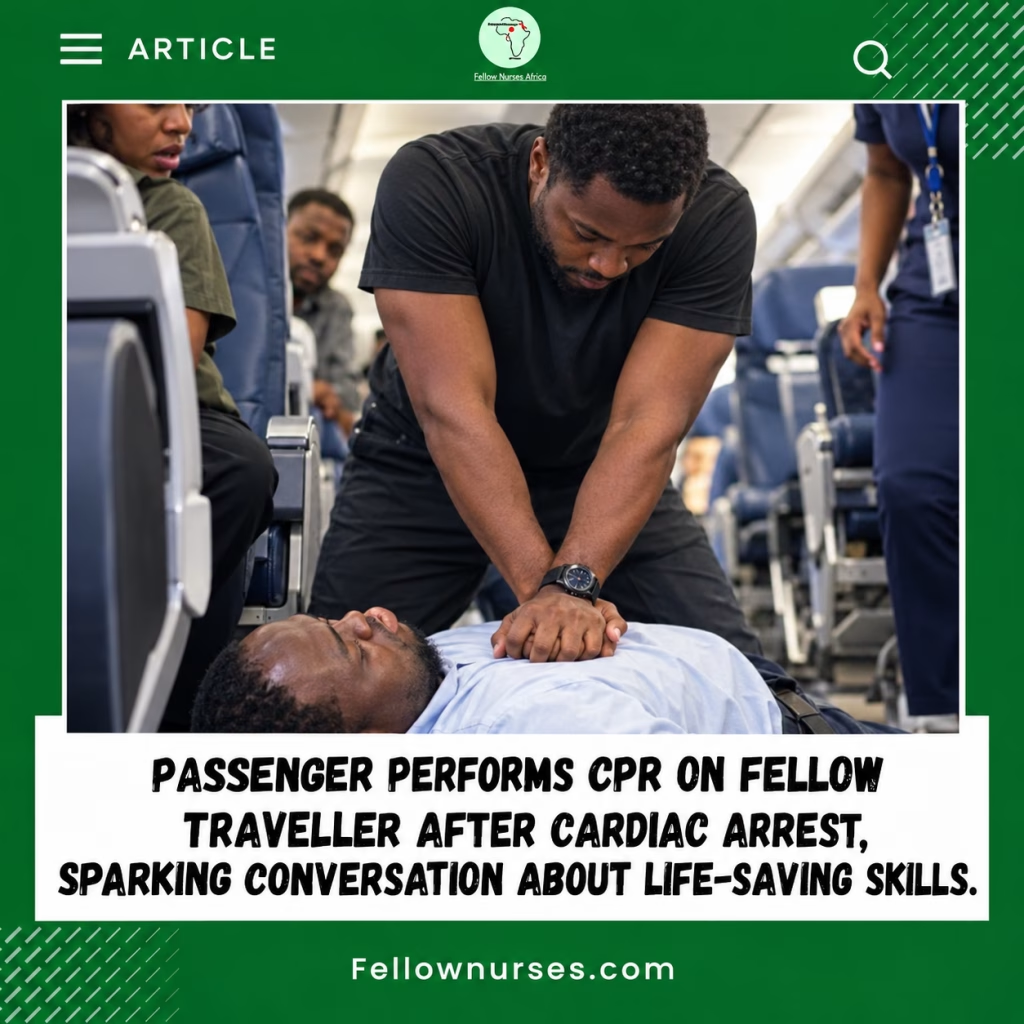
Passenger Performs CPR on Fellow Traveller After Cardiac Arrest, Sparking Conversation About Life-Saving Skills
FNA NEWS, LAGOS NIGERIA, 8th Of SEPTEMBER, 2026
A passenger has reportedly performed cardiopulmonary resuscitation (CPR) on a fellow traveller who suddenly collapsed and was believed to be in cardiac arrest, in an incident that has drawn attention on social media in Nigeria.
👉 Join Fellow Nurses Africa on WhatsApp
The incident, which is currently circulating on X, has sparked a wider conversation about the importance of knowing basic life-saving skills, especially when a medical emergency occurs far from a hospital.
Cardiac arrest is a medical emergency in which the heart suddenly stops pumping blood effectively. Without immediate intervention, the brain and other vital organs can quickly become deprived of oxygen.
This is where bystander CPR can make a critical difference.
CPR involves chest compressions that help maintain blood flow to vital organs while waiting for emergency medical assistance or an automated external defibrillator (AED). Current guidance emphasises starting CPR as soon as possible when a person is unresponsive and not breathing normally.
Importantly, cardiac arrest is not the same as a heart attack. A heart attack occurs when blood flow to part of the heart is blocked, while cardiac arrest is an electrical problem that causes the heart to stop pumping effectively. However, a heart attack can sometimes trigger cardiac arrest.
Why bystander CPR matters
👉 Join Fellow Nurses Africa on WhatsApp
A 2026 study examining out-of-hospital cardiac arrest in Nigeria found major gaps in the country’s emergency response system. CPR was attempted in only 15.2% of the cases studied, and public bystanders carried out most of the CPR interventions recorded. Only a small proportion of patients survived to hospital discharge.
The findings highlight an important reality: the first person able to help may not be a doctor, nurse or paramedic. It may simply be the person standing or sitting nearby.
For travellers, this could mean a fellow passenger.
For commuters, it could be another passenger on a bus.
For members of the public, it could be a stranger on the street.
What should you do if someone collapses?
If a person suddenly becomes unresponsive and is not breathing normally, call for emergency help immediately and begin CPR if you are able to do so.
Push hard and fast in the centre of the chest and continue until professional help arrives, an AED is available, or the person shows clear signs of life.
An AED should be used as soon as one is available, following its voice or visual instructions.
The viral incident is a reminder that emergency preparedness is not only the responsibility of healthcare professionals. Basic CPR knowledge can give ordinary people the confidence to act during the critical minutes before professional help arrives.
Sometimes, knowing what to do can be the difference between watching a crisis unfold and giving someone a chance to survive.
👉 Join Fellow Nurses Africa on WhatsApp
Fellow Nurses Africa is the independent voice of African nursing, we educate, inform and support nurses across Africa.

Durowoju Abisola is a registered nurse, nurse writer and On-Air Correspondent at Fellow Nurses Africa (FNA), passionate about nursing leadership, health education and advocacy.
Through journalism, storytelling and content creation, she amplifies important conversations around nursing, healthcare and the experiences of nurses in Nigeria. She is committed to using her voice and professional knowledge to educate the public, challenge misconceptions and inspire the next generation of nurses.