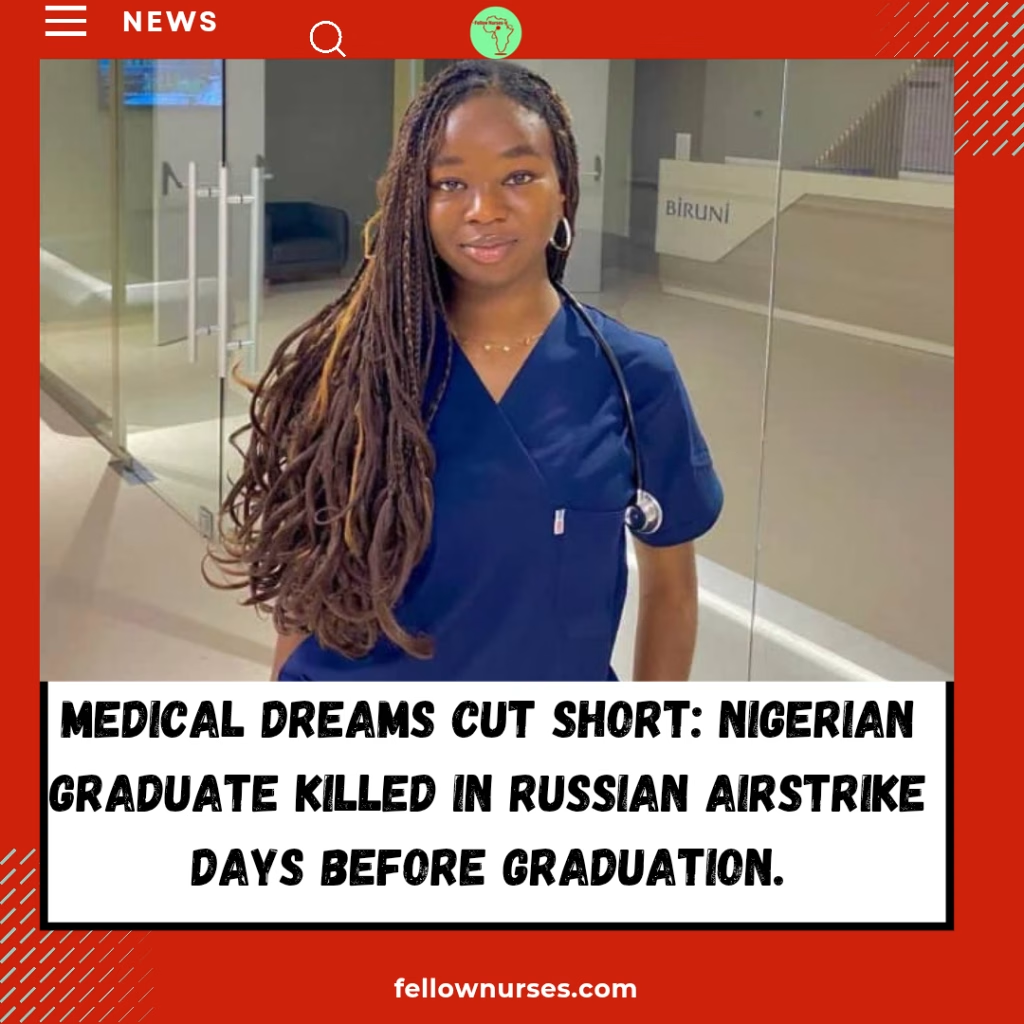
Medical Dreams Cut Short: Nigerian Graduate Killed in Russian Airstrike Days Before Graduation
A 23-year-old Nigerian medical graduate has died from injuries sustained in a Russian airstrike on the Ukrainian city of Kharkiv, just days before she was due to receive her degree.
Nnani Adaobi Marian, who studied at Kharkiv National Medical University, was critically injured on 29 June 2026 when Russian forces struck the Kholodnohirskyi district with guided aerial bombs. She was taken to hospital in Kharkiv before being transferred to Germany for specialist treatment. Despite intensive medical efforts, she died on 5 July.
Her close friend, Fatima Huseynova, also a 23-year-old medical student at the same university, was killed instantly in the attack. The two women were on their way to a graduation photoshoot at the time.
What happened
The strike on the afternoon of 29 June killed one person and injured 12 others. It damaged civilian infrastructure, including a tram, residential buildings and vehicles.
Kharkiv National Medical University confirmed Ms Marian’s death in an official statement. The university described her as “a bright, sincere and kind-hearted person” who was distinguished by her “thirst for knowledge, hard work and sincere desire to help others.”
👉 Join our Whatsapp channel Here
Ms Marian had been enrolled at the university since 2020. She had also completed international internships at the University of Cambridge in 2024 and at Biruni University in Turkey in 2025, where she focused on advancing her professional medical skills and scientific work.
Victims were training to become doctors
Both young women were students at the university’s Faculty of Medicine. They were training to become physicians, not nurses. University statements and reports from the time refer to them as future doctors who had chosen careers dedicated to serving people and saving lives.
Official reactions
The Kharkiv Regional Prosecutor’s Office said medical teams fought to save Ms Marian’s life until the end. It expressed sincere condolences to her family and loved ones.
The university paid tribute to both students, noting that their lives had been cut tragically short by the attack.
Broader context
The deaths highlight the continuing risks faced by civilians and international students in Kharkiv, a city that has endured repeated Russian strikes throughout the war. Many students from Africa and other regions have studied medicine at Ukrainian universities for years.
International medical graduates often return to their home countries to practise or contribute to healthcare systems. The loss of these two young women represents not only personal tragedy for their families but also the disruption of future contributions to global health.
This report is based on official statements from Kharkiv National Medical University, the Kharkiv Regional Prosecutor’s Office, and reporting by established Ukrainian and international outlets, including Ukrainska Pravda and local authorities. Details of the strike, casualties and the victims’ academic backgrounds have been cross-checked across multiple credible sources.
👉 Join our Whatsapp channel Here
Fellow Nurses Africa is the independent voice of African nursing, we educate, inform and support nurses across Africa.

Charles Wealth is an accomplished healthcare administrator with decades of hands-on experience across various healthcare organizations in Nigeria and beyond. Known for his strategic leadership, operational excellence, and deep commitment to advancing the nursing profession, Charles brings a wealth of expertise to healthcare management, policy, and professional development.
As a co-founder and Editor at Fellow Nurses Africa, he plays a pivotal role in shaping content that educates, inspires, and unites nurses across the continent. His editorial vision focuses on amplifying the voices of nurses, highlighting best practices, addressing contemporary challenges in healthcare, and promoting professional growth within the nursing community.
With a strong background in healthcare administration, Charles is passionate about bridging the gap between clinical practice and effective leadership. He continues to contribute significantly to the development of robust healthcare systems and the empowerment of nurses through knowledge sharing and advocacy.