
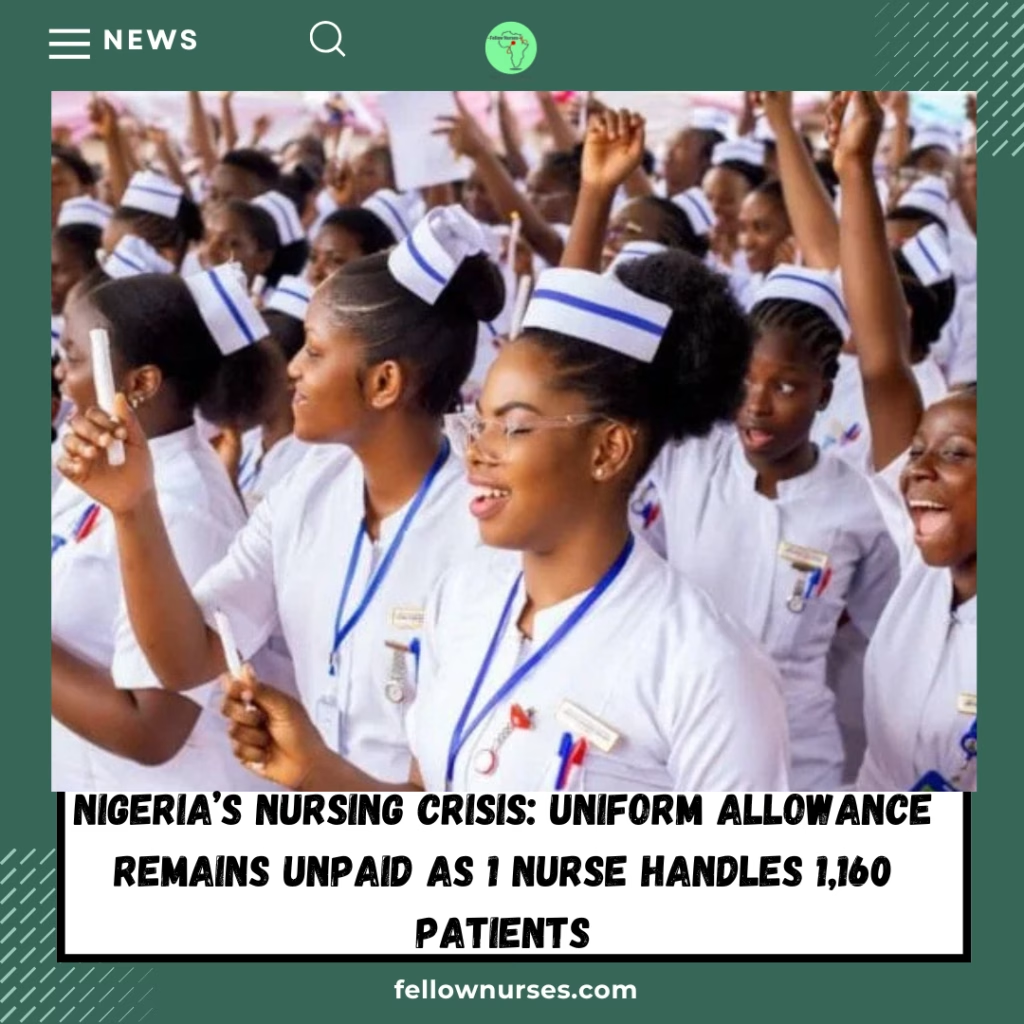
Nigeria’s Nursing Crisis: Uniform Allowance Remains Unpaid as 1 Nurse Handles 1,160 Patients
Fellow Nurses Africa News Desk | 29 March 2026
Nigeria’s public hospitals are operating under extreme pressure. One nurse is now responsible for up to 1,160 patients a ratio that far exceeds the World Health Organization’s recommended 1:4 to 1:5 standard and signals a deepening crisis in the country’s healthcare system.
👉 Join our Whatsapp channel Here
This alarming shortage, worsened by the ongoing exodus of skilled nurses (often called “Japa syndrome”), has led to longer waiting times, higher infection risks, increased morbidity, and rising mortality rates in federal and state facilities. Compounding the strain is a long-standing grievance: the uniform allowance for nurses in federal employment has remained stuck at ₦20,000 per year for more than two decades, despite a recent government approval for an increase to ₦80,000 that has yet to materialise.
The Human and Professional Toll
Nurses across Nigeria’s six geopolitical zones describe a daily reality that undermines both patient safety and their own wellbeing. Many work 12- to 24-hour shifts, moving from bed to bed to dress wounds, administer medication, and monitor critically ill patients. Yet they often lack enough clean uniforms a basic requirement for infection control.
“Wearing the same uniform for long hours is not ideal because it increases the risk of transmitting infections to patients,” says Nurse Funmilola Faminu, Chairman of the National Association of Nigerian Nurses and Midwives (NANNM) at University College Hospital, Ibadan. “Sometimes we spend 24 hours at the bedside of patients.”
Healthcare experts emphasise that contaminated uniforms can harbour microorganisms from blood, bodily fluids, and routine patient contact. Without sufficient changes of attire, nurses face heightened personal health risks while inadvertently raising the chance of hospital-acquired infections.
Decades of Stagnation and Broken Promises
Investigations reveal that the ₦20,000 uniform allowance has never been paid consistently. Some federal hospitals disburse it at the start of the year, others at the end, and many split it into instalments or simply fail to pay at all. According to NANNM-Federal Health Institutions President Morakinyo Rilwan, more than 70 per cent of federal health institutions are not paying even the old rate, with some owing nurses up to five or six years of arrears.
In February 2026, the National Salaries, Wages and Income Commission approved an upward review to ₦80,000 per annum, effective from 1 January 2026, to be paid through the Integrated Personnel and Payroll Information System (IPPIS). However, as of late March 2026, no payments have been made and no clear payment schedule has been communicated.
“We have yet to receive anything,” Rilwan told reporters. “We don’t even know the modality through which it will be paid whether it will be monthly, quarterly, every six months, or paid at once annually.”
Nurses across facilities echo the frustration. At Federal Teaching Hospital, Gombe, Magaji Samaila noted that many colleagues now use part of their salaries to buy uniforms. “Our work involves getting in contact with patients with different kinds of health challenges… If you are not properly kitted, there may be a splash, and you need to go back immediately and change that uniform.”
Expert Insights: Why This Matters for Nigeria’s Health Future
From a public health perspective, the 1:1,160 nurse-to-patient ratio represents a critical failure in workforce planning. The WHO has long warned that ratios worse than 1:10 significantly increase medical errors, burnout, and preventable deaths. In Nigeria, the situation is compounded by the loss of over 75,000 trained nurses and midwives to overseas opportunities, leaving a reported shortage of around 30,000 midwives alone.
This brain drain is not merely a staffing issue it is a systemic threat. Understaffed wards lead to delayed care, exhausted professionals, and poorer outcomes, particularly in maternal and child health, emergency services, and chronic disease management. The July 2025 nationwide strike by nurses highlighted these exact concerns, yet core demands for mass recruitment, a separate salary structure, and better welfare remain largely unaddressed.
Advocates argue that timely payment of even the modest ₦80,000 allowance would be a low-cost signal of respect and support. More fundamentally, Nigeria must tackle the root causes of migration: competitive pay, safe working conditions, clear career progression, and investment in domestic training pipelines.
A Call for Urgent Action
Nigeria’s nursing crisis is not abstract statistics it is the lived experience of patients waiting hours for basic care and nurses risking their health to provide it. Restoring trust in the system requires immediate implementation of the approved uniform allowance, transparent payment mechanisms, and a comprehensive national strategy to reverse brain drain.
Without decisive steps, the 1:1,160 ratio will continue to climb, placing ever-greater pressure on an already fragile healthcare network. Policymakers, hospital administrators, and the Federal Ministry of Health must act now not just for the nurses in white uniforms, but for every Nigerian who depends on them.
👉 Join our Whatsapp channel Here
Fellow Nurses Africa is the independent voice of African nursing, we educate, inform and support nurses across Africa

Kehinde Oluwatosin is one of the many editors here at Fellow Nurses Africa and fellownurses.com.
He is a registered nurse with a Master of Science degree in healthcare leadership from the University of Hull, United Kingdom. Kehinde is passionate about advancing the nursing profession across Africa. As Co-Founder of Fellow Nurses Africa, he plays a key role in shaping editorial direction, ensuring our content educates, informs, and empowers nurses continent-wide.
With expertise in leadership, patient flow, and healthcare operations, Kehinde brings valuable insights to nursing news, career development, and policy discussions. He is committed to amplifying the voice of African nurses and driving positive change in the profession.