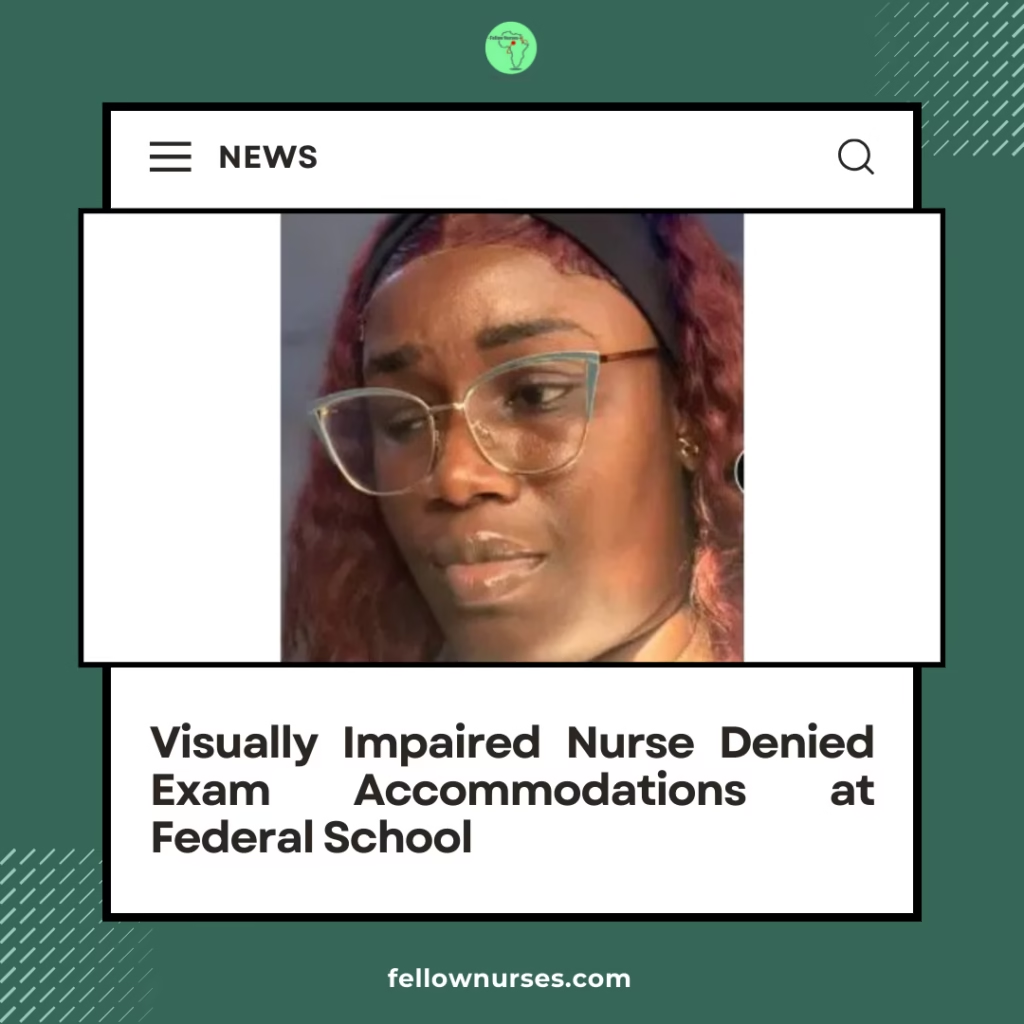
Uche Olivia, a registered nurse with severe vision impairment, has been denied requested accommodations during an entrance exam at the Federal Neuropsychiatric School of Post-Basic Mental Health Nursing in Enugu.
Olivia was diagnosed with optic nerve atrophy in October 2024.
She applied for further training in mental health nursing.
She requested large-print question papers, a reader and extra time, as allowed under Nigerian law.
She arrived at the exam venue at 8 a.m.
Accreditation started two hours later.
The exam began around 5 p.m.
During the test, Olivia asked for help.
An examiner reportedly said: “If you knew you were not able to read, why did you come to school or apply?”
She showed medical documents to the provost.
The provost replied: “Answer the ones you can see, leave the ones you cannot.”
The school has not responded to requests for comment.
Disability advocate Yinka Olaito called the treatment a loss of dignity for visually impaired Nigerians.
The Joint National Association of Persons with Disabilities (JONAPWD) described it as ignorance in a federal institution.
Leaders from the association demanded accountability.
The 1999 Constitution and the Discrimination Against Persons with Disabilities (Prohibition) Act 2018 require reasonable accommodations, including large-print papers, scribes and extra time.
Advocates say the denial violates these laws.
The case has drawn calls for reform in educational access for people with disabilities.
🔗 Join our WhatsApp channel for real-time updates on nurses’ rights and nursing stories in Nigeria
Fellow Nurses Africa is the independent voice of African nursing. We educate, inform and support nurses across Africa.

Charles Wealth is an accomplished healthcare administrator with decades of hands-on experience across various healthcare organizations in Nigeria and beyond. Known for his strategic leadership, operational excellence, and deep commitment to advancing the nursing profession, Charles brings a wealth of expertise to healthcare management, policy, and professional development.
As a co-founder and Editor at Fellow Nurses Africa, he plays a pivotal role in shaping content that educates, inspires, and unites nurses across the continent. His editorial vision focuses on amplifying the voices of nurses, highlighting best practices, addressing contemporary challenges in healthcare, and promoting professional growth within the nursing community.
With a strong background in healthcare administration, Charles is passionate about bridging the gap between clinical practice and effective leadership. He continues to contribute significantly to the development of robust healthcare systems and the empowerment of nurses through knowledge sharing and advocacy.