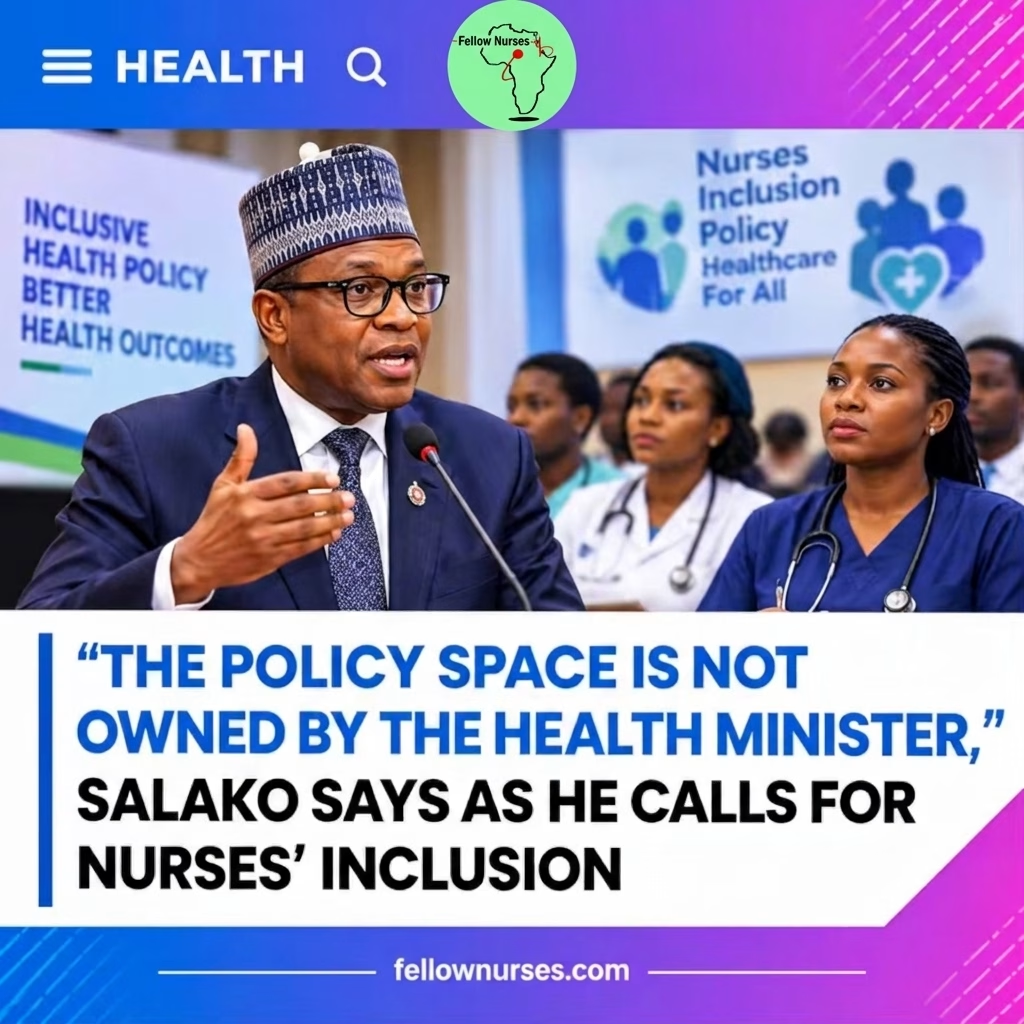
“The Policy Space Is Not Owned by the Health Minister,” Salako Says as He Calls for Nurses’ Inclusion
FNA NEWS, 10th Of October, 2026
**Nigeria’s Minister of State for Health and Social Welfare, Dr Iziaq Salako, says nurses must be involved in health policy development and implementation.
👉 Join Fellow Nurses Africa on WhatsApp
As oncology nursing leaders highlight gaps in specialist training, staffing and workplace safety.**
Nigeria’s Minister of State for Health and Social Welfare, Dr Iziaq Salako, has called for greater involvement of nurses in health policy development and implementation, declaring that the policy space does not belong to the Minister of Health alone.
“The policy space is for every one of us. It is not owned by the Minister of Health,” Salako said while addressing oncology nurses at the first National Scientific Conference of the Oncology Nurses Association of Nigeria (ONAN) in Abuja.
He stressed that nurses should be part of the process of developing and implementing policies that shape healthcare delivery in the country.
“Nurses should be part and parcel of the policy development and implementation process,” he said.
Salako was represented at the conference by Dr Uchechukwu Nwokwu, National Coordinator of the National Cancer Control and Nuclear Medicine Programme.
The conference, held from 7 to 10 October 2026, brought together oncology nurses, cancer specialists, policymakers and other stakeholders to discuss ways to improve cancer care in Nigeria.
The minister’s remarks place nursing representation at the centre of discussions about healthcare policy and the role of nurses in improving patient outcomes.
Why nurses must be part of health policy decisions
Nurses work closely with patients across primary, secondary and tertiary healthcare facilities. This gives them direct experience of the challenges facing patients and frontline services.
Their responsibilities extend beyond administering treatments. Nurses also educate patients, monitor changes in their conditions, coordinate care, support families and identify problems that may require further clinical attention.
These experiences can provide valuable insights when governments and healthcare institutions develop policies on staffing, patient safety, professional education and service delivery.
However, frontline experience can only influence decisions when nurses have meaningful opportunities to contribute.
Salako’s statement reinforces the importance of including nurses in policy discussions rather than limiting their role to implementing decisions made by others.
From policy recognition to meaningful representation
👉 Join Fellow Nurses Africa on WhatsApp
The minister’s call is significant, but meaningful inclusion requires more than acknowledging the importance of nurses.
Nurses need appropriate representation in relevant policy committees, professional consultations and decision-making structures.
Governments should also consider nurses’ views when planning the workforce and allocating resources. Their input matters when new policies affect clinical practice.
Nursing leadership is particularly important in discussions about staffing levels, professional development, workplace safety and the quality of patient care.
Policies developed without sufficient input from frontline professionals may overlook practical challenges that affect implementation.
Including nurses early in the process can help decision-makers understand how proposed policies may affect healthcare workers and patients in real clinical settings.
It can also create opportunities for collaboration between nurses, doctors, policymakers and other professionals whose expertise is necessary for effective healthcare delivery.
The objective is not to give one professional group exclusive control over health policy. It is to ensure that decisions benefit from the knowledge and experience of the different professionals responsible for delivering care.
Oncology nurses highlight challenges facing cancer care
👉 Join Fellow Nurses Africa on WhatsApp
Salako spoke at a conference on advancing oncology nursing practice across the cancer care continuum.
Oncology nurses support patients through different stages of cancer care, including treatment, symptom management, survivorship, palliative care and end-of-life support.
Their work requires specialised knowledge, effective communication and the ability to support patients and families through physically and emotionally demanding experiences.
During the conference, ONAN President Siraju Marafa, represented by the association’s Vice President, Joyce Asufi, highlighted challenges facing oncology nursing in Nigeria.
He identified limited opportunities for specialist training, barriers to early detection, access to cancer treatment and concerns about workplace safety.
Marafa also called for better protection for nurses who prepare and administer cytotoxic drugs or work in environments where they may be exposed to radiation.
He raised concerns about access to adequate protective equipment, safe drug-handling systems and regular monitoring of occupational exposure.
He urged the government to collaborate with the association to improve workplace safety and expand opportunities for oncology nurses to receive specialist training in Nigeria and abroad.
The association also called for incentives to encourage more nurses to pursue oncology as a specialty.
Shortage of specialist oncology nurses raises concern
The President of the Nigerian Cancer Society, Professor Abidemi Omonisi, also highlighted the shortage of qualified oncology nurses in the country.
He said some hospitals rely on nurses who have expressed an interest in cancer care or have been assigned to cancer units without necessarily having specialist oncology qualifications.
According to Omonisi, the absence of qualified oncology nurses in some facilities remains a concern because the specialty is an important component of multidisciplinary cancer care.
He encouraged nurses and nursing students to explore oncology nursing and take advantage of available training and mentorship opportunities.
These concerns show how health policy and specialist education affect patient care. Better training can help nurses deliver safer and more effective treatment.
Expanding access to cancer services requires investment not only in treatment facilities and technology but also in the professionals who deliver care.
What Salako’s statement means for nursing in Nigeria
The minister’s remarks provide an opportunity to examine how nursing representation can be strengthened across Nigeria’s healthcare system.
For the call to translate into measurable progress, several areas deserve attention.
1. Representation in health policy development
Policymakers should give nurses opportunities to contribute to relevant policy committees, consultations and planning processes at federal and state levels.
2. Investment in nursing education
Specialist training, continuing professional development and mentorship can help nurses develop the skills required to respond to changing healthcare needs.
3. Better workforce planning
Policymakers should consider nursing workforce needs when planning healthcare services, including the availability of appropriately trained specialists.
4. Safer working environments
Policies should address occupational risks, access to protective equipment and safe clinical procedures, particularly in specialised areas such as oncology.
5. Accountability for implementation
Where nurses are included in policy development, institutions should establish clear mechanisms for evaluating implementation and assessing the impact of policies on healthcare workers and patients.
These are practical steps that could help turn the principle of inclusion into a more consistent feature of healthcare governance.
Nurses’ voices must extend beyond the clinical setting
Salako’s statement highlights a broader issue in nursing: the relationship between clinical responsibility and influence over the policies that shape professional practice.
Nurses are expected to follow clinical standards, implement healthcare policies and maintain professional accountability. Their involvement in developing those policies can help ensure that decisions reflect the realities of patient care.
Meaningful participation also provides an opportunity for nurses to contribute their expertise to discussions about the future of healthcare in Nigeria.
However, the minister’s statement is a call for inclusion, not evidence that new representation mechanisms or policy reforms have already been introduced.
The next step is to turn that commitment into action. This means giving nurses a voice in decision-making and introducing practical changes across the health system.
Conclusion
“The policy space is for every one of us. It is not owned by the Minister of Health.”
Salako’s statement sends a clear message about the importance of participation in health policy development. For nurses, it reinforces the need for their professional knowledge and frontline experience to inform decisions affecting healthcare delivery.
The challenge now is to translate that recognition into meaningful representation, stronger professional development and policies that support safe, effective patient care.
If Nigeria is to strengthen its healthcare system, nurses must have opportunities to contribute not only to the delivery of care but also to the decisions that shape it.
👉 Join Fellow Nurses Africa on WhatsApp
Fellow Nurses Africa is the independent voice of African nursing, we educate, inform and support nurses across Africa.

Durowoju Abisola is a registered nurse, nurse writer and On-Air Correspondent at Fellow Nurses Africa (FNA), passionate about nursing leadership, health education and advocacy.
Through journalism, storytelling and content creation, she amplifies important conversations around nursing, healthcare and the experiences of nurses in Nigeria. She is committed to using her voice and professional knowledge to educate the public, challenge misconceptions and inspire the next generation of nurses.