No Evidence NMCN Issued Viral Graphic Claiming ‘Dancing in Uniform’ Is a Code Breach
FNA NEWS, 7th Of October, 2026
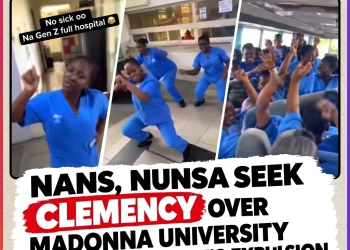
A viral graphic circulating across social media claims that the Nursing and Midwifery Council of Nigeria (NMCN) has declared dancing while wearing a nursing uniform a breach of the professional code.
However, Fellow Nurses Africa has found no evidence that the NMCN issued the viral graphic or the regulatory directive it describes.
The graphic, designed in the style of an official regulatory announcement, carries the headline “DANCING IN UNIFORM IS A CODE BREACH.”
It claims that the NMCN, alongside the Minister of Health and “relevant national and American nursing regulatory bodies”, held an official meeting on October 4, 2026, where the alleged decision was reached.
According to the graphic, any nurse or healthcare provider caught dancing while wearing a professional uniform, whether inside or outside a healthcare facility, would have breached the code of professional conduct.
It further claims that the licence of any offender would be seized and the person’s name “permanently deleted” from the Council’s official portal.
Fellow Nurses Africa could not locate an official NMCN circular, statement, code amendment or publication supporting these claims.
What does the NMCN Code actually say?
The NMCN’s published Code of Professional Conduct does contain rules concerning professional appearance, conduct and the wearing of nursing uniforms.
The code states that nurses must always appear neat and decently dressed while on duty and in uniform.
It also specifically states that nurses must not wear uniforms and overalls outside hospital premises.
The code further requires nurses to engage in behaviour and activities that uphold the social status and integrity of the nursing profession.
However, the published code does not state that dancing in uniform, by itself, is a specific code violation.
It also does not support the specific claim in the viral graphic that a nurse caught dancing in uniform will automatically have their licence seized and their name permanently deleted from the NMCN portal.
This distinction is important.
A regulator may set standards for professional appearance and conduct without every activity performed while wearing a uniform being separately defined as a disciplinary offence.
Where did the viral graphic originate?
At the time of publication, Fellow Nurses Africa could not independently establish the original creator or first public account to publish the graphic.
Searches of the graphic’s distinctive wording, including the claim that “dancing in uniform is a code breach” and the alleged punishment involving permanent deletion from the NMCN portal, did not produce an identifiable official NMCN publication.
No verifiable NMCN circular matching the graphic was found in the Council’s publicly available Code of Professional Conduct or other official material reviewed for this report.
This means that while the image is circulating online, its original source remains unverified.
Fellow Nurses Africa therefore cannot responsibly attribute its creation to a particular nurse, organisation, social-media page or individual without further evidence.
Why the claim matters
The issue is not simply whether nurses should dance.
Professional regulators carry significant authority, and claims presented as official regulatory directives can influence how thousands of nurses and nursing students understand their professional obligations.
A fabricated or unverified notice can also create unnecessary fear when it threatens professional licences or registration status.
For nurses, nursing students and members of the public, the distinction between an official regulation, institutional rule, professional guidance and social-media claim is therefore critical.
The NMCN’s actual code already establishes expectations around professional appearance and conduct. It states, among other things, that nurses should maintain neat and decent appearance while on duty and in uniform and should not wear uniforms and overalls outside hospital premises.
Those existing provisions should not be expanded through an unverified graphic into rules that the Council has not publicly established.
Fellow Nurses Africa’s finding
Fellow Nurses Africa found no evidence that the NMCN issued the viral graphic claiming that “dancing in uniform” is a code breach with the penalties stated in the image.
The NMCN’s published Code of Professional Conduct contains provisions governing professional appearance, conduct and the wearing of uniforms, including a rule against wearing uniforms and overalls outside hospital premises.
However, the specific claim that dancing in a nursing uniform automatically constitutes a code breach and will result in licence seizure and permanent deletion from the NMCN portal is not supported by the official code reviewed.
Until the NMCN officially confirms otherwise, the graphic should not be treated or circulated as an official Council notice.
What nurses should do
Nurses and nursing students encountering the graphic online should verify regulatory claims through official NMCN communication channels before sharing them.
Where a purported regulatory notice involves professional registration, licensing or disciplinary sanctions, checking the original circular or statement is particularly important.
A professional debate about appropriate conduct on social media is legitimate.
Presenting an unverified social-media graphic as an official regulatory directive is a different matter.

Durowoju Abisola is a registered nurse, nurse writer and On-Air Correspondent at Fellow Nurses Africa (FNA), passionate about nursing leadership, health education and advocacy.
Through journalism, storytelling and content creation, she amplifies important conversations around nursing, healthcare and the experiences of nurses in Nigeria. She is committed to using her voice and professional knowledge to educate the public, challenge misconceptions and inspire the next generation of nurses.