
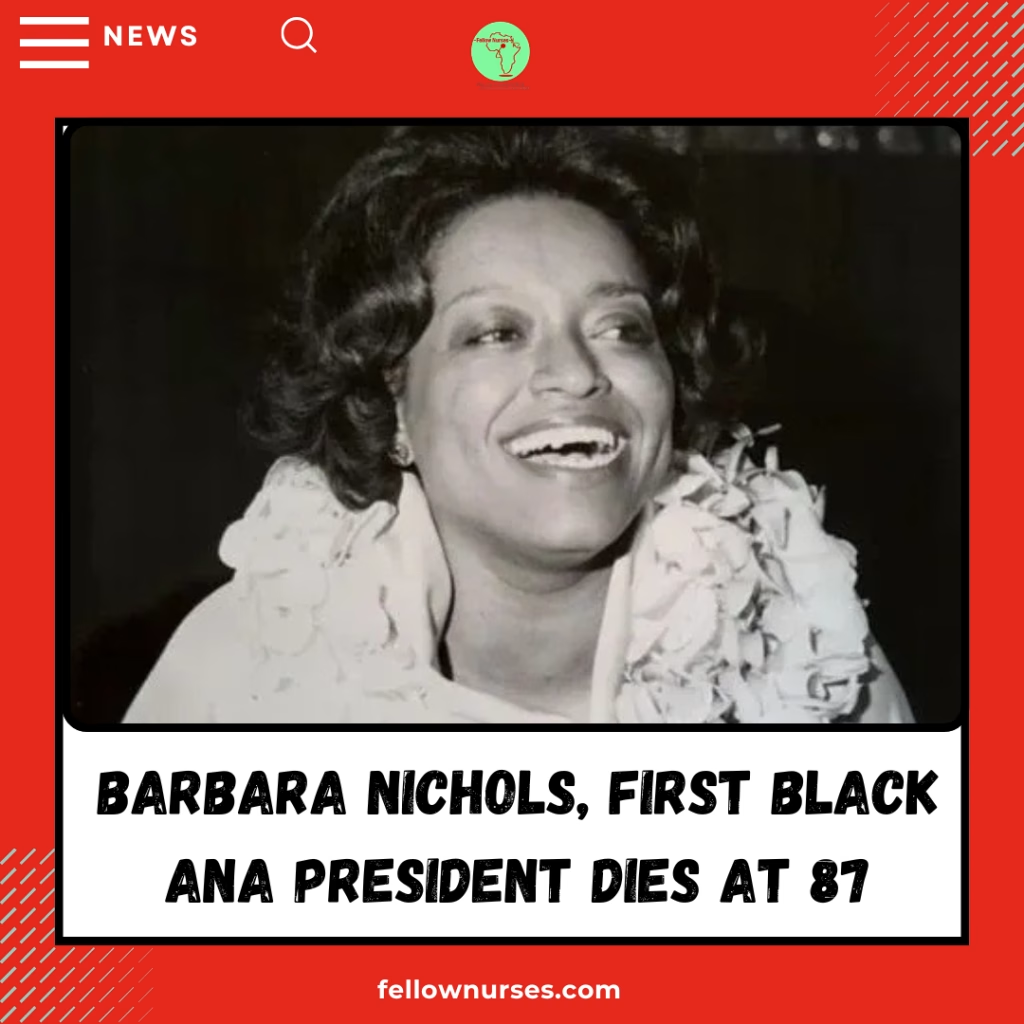
Barbara Nichols, First Black President of the American Nurses Association, Dies at 87
By FNA News Published: 31 July 2026
Barbara L. Nichols, the first Black president of the American Nurses Association (ANA) and one of the most influential nursing leaders in modern history, has died at the age of 87.
Nichols died on 22 July 2026, concluding a nursing career that spanned more than six decades. Throughout her life, she championed nursing leadership, professional education, health policy and equity, leaving an enduring impact on the profession in the United States and internationally.
Her death has prompted tributes from nursing organisations and leaders across the world, who have described her as a trailblazer whose work continues to shape healthcare and the nursing profession.
A Historic Leader in Nursing
Born in Waterville, Maine, in 1939 and raised in Portland, Nichols trained at the Massachusetts Memorial Hospital School of Nursing before earning a Bachelor of Science degree from Case Western Reserve University and a master’s degree from the University of Wisconsin–Madison.
👉 Join our Whatsapp channel Here
She also served in the U.S. Navy Nurse Corps, where she worked as a head nurse before moving into leadership positions in healthcare and professional nursing organisations.
Nichols made history in 1970 when she became the first Black president of the Wisconsin Nurses Association.
Eight years later, she broke another barrier by becoming the first Black president of the American Nurses Association, the largest professional nursing organisation in the United States. She was re-elected in 1980 and served until 1982.
Her election marked a significant milestone for diversity and representation in nursing leadership during a period when few Black professionals occupied senior positions within national healthcare organisations.
Championing Nursing Education and Policy
As ANA president, Nichols advocated for stronger nursing education and greater professional recognition.
She was a leading supporter of the Bachelor of Science in Nursing (BSN) as the preferred educational pathway into professional nursing. While the debate over entry-to-practice qualifications continues today, her advocacy helped elevate discussions around educational standards and professional development.
Nichols also worked to strengthen collaboration between nurses, physicians and hospital leaders, ensuring that nurses played a greater role in national healthcare policy and decision-making.
Her leadership reinforced the importance of including nursing perspectives in discussions that shape patient care and health systems.
Global Influence Beyond the United States
Nichols’ influence extended well beyond American nursing.
From 1999 to 2011, she served as Chief Executive Officer of the Commission on Graduates of Foreign Nursing Schools (CGFNS), now known as TruMerit. During her tenure, she promoted high professional standards for internationally educated nurses and supported ethical approaches to global nurse migration.
She also served on the board of the International Council of Nurses (ICN), contributing to international nursing policy and workforce development.
Her work strengthened cooperation between nursing organisations across countries and helped raise awareness of global workforce challenges that remain relevant today.
Tributes from Nursing Leaders
Following the announcement of her death, nursing leaders praised Nichols’ lifelong commitment to the profession.
American Nurses Association President Jennifer Mensik Kennedy said Nichols “redefined nursing leadership,” while International Council of Nurses Chief Executive Officer Howard Catton described her as a leader whose influence was felt wherever nurses came together internationally.
Many have credited Nichols with creating opportunities for future generations of nurses, particularly women and minority leaders pursuing careers in healthcare leadership.
An Enduring Legacy
Nichols received numerous honours throughout her career, including recognition as a Living Legend by the American Academy of Nursing in 2010 and induction into the American Nurses Association Hall of Fame in 2022.
Her leadership continues to influence conversations on nursing education, workforce planning, professional leadership and ethical international recruitment.
For today’s nurses, her career serves as a reminder that leadership extends beyond the bedside. It also involves shaping policy, improving healthcare systems and advocating for the profession.
Barbara Nichols leaves behind a legacy defined by courage, service and an unwavering commitment to advancing nursing. Her contributions will continue to inspire nurses and healthcare leaders around the world for generations to come.
👉 Join our Whatsapp channel Here
FNA Analysis
Barbara Nichols’ legacy extends beyond breaking racial barriers. She demonstrated that nurses belong at the highest levels of healthcare leadership and policymaking.
At a time when countries across Africa are strengthening nursing leadership, expanding advanced nursing practice and advocating for greater investment in the profession, her life’s work remains highly relevant.
Her career also highlights the importance of ethical international nurse recruitment, leadership development and professional education—issues that continue to shape nursing globally.
For African nurses, Nichols’ story is both a historical milestone and a reminder that nursing leadership can influence healthcare far beyond the clinical setting.
👉 Join our Whatsapp channel Here
Fellow Nurses Africa is the independent voice of African nursing, we educate, inform and support nurses across Africa.

Kehinde Oluwatosin is one of the many editors here at Fellow Nurses Africa and fellownurses.com.
He is a registered nurse with a Master of Science degree in healthcare leadership from the University of Hull, United Kingdom. Kehinde is passionate about advancing the nursing profession across Africa. As Co-Founder of Fellow Nurses Africa, he plays a key role in shaping editorial direction, ensuring our content educates, informs, and empowers nurses continent-wide.
With expertise in leadership, patient flow, and healthcare operations, Kehinde brings valuable insights to nursing news, career development, and policy discussions. He is committed to amplifying the voice of African nurses and driving positive change in the profession.