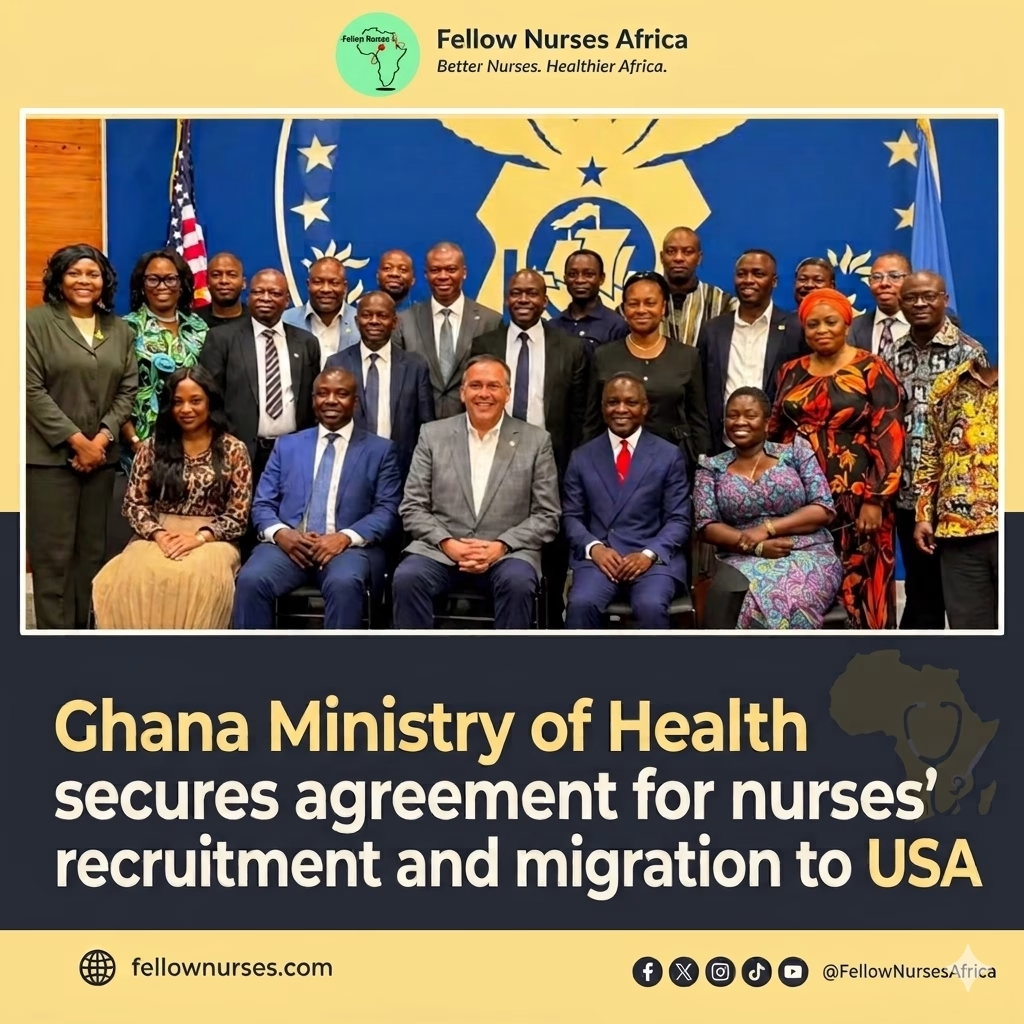
Ghana Ministry of Health Secures Agreement for Nurses’ Recruitment and Migration to USA
FNA NEWS, 16th Of September, 2026
The Ghana Ministry of Health has secured a new pathway that could enable qualified Ghanaian nurses to access employment opportunities and legally migrate to the United States.
👉 Join Fellow Nurses Africa on WhatsApp
The development follows the signing of a Memorandum of Understanding (MoU) between the Government of Ghana and the City of Columbus, Ohio. The agreement was signed by Ghana’s Ministries of Health and Labour, Jobs and Employment after months of technical discussions with counterparts in the United States.
Under the arrangement, Ghanaian health professionals, particularly nurses, are expected to gain access to structured employment opportunities in Columbus. The partnership is intended to provide a framework for the ethical recruitment and deployment of qualified professionals rather than relying solely on individual migration pathways.
More Than a Recruitment Deal
Ghana’s Health Minister, Kwabena Mintah Akandoh, said the agreement goes beyond recruitment.
According to the Ministry, any deployment arrangement must protect the rights, welfare and professional interests of Ghanaian health workers. The initiative is also being pursued in line with Ghana’s Migration Policy, international standards and principles for ethical recruitment.
The partnership is also expected to support nursing education, workforce development, skills transfer, institutional strengthening, research and health innovation. This means the arrangement is being presented not only as an employment pathway but also as a broader healthcare partnership between Ghana and Columbus.
Why This Matters to Nurses
👉 Join Fellow Nurses Africa on WhatsApp
For Ghanaian nurses seeking international career opportunities, the agreement could provide a more structured route into the US labour market.
Internationally educated nurses seeking to practise in the United States still have to meet applicable professional, regulatory, immigration and employment requirements. The new agreement does not automatically grant a nursing licence or immigration status; rather, it creates a framework through which employment and deployment opportunities can be developed.
Columbus Mayor Andrew Ginther said Ghana had invested significantly in training nursing professionals who could legally migrate to meet healthcare workforce needs in Columbus.
The development therefore comes at the intersection of two realities: the demand for qualified healthcare professionals in parts of the United States and the growing interest among African health workers in international employment.
The Bigger African Nursing Migration Question
👉 Join Fellow Nurses Africa on WhatsApp
Ghana’s move also adds to a wider conversation about organised health-worker migration from Africa.
When nurses leave for international opportunities, migration can provide professionals with better employment prospects, international experience and opportunities for career development. At the same time, countries of origin must consider how continued outward migration affects staffing levels, specialist services and the ability of health systems to retain experienced professionals.
That makes the protection of nurses and the sustainability of the health workforce important parts of any international recruitment arrangement.
For Ghana, the government says the Columbus partnership will be guided by ethical recruitment principles and safeguards for health workers. The effectiveness of the agreement will ultimately depend on how these commitments are translated into actual recruitment, employment, migration and worker-protection processes.
For nurses watching the development across Africa, the bigger question may be whether more countries will begin pursuing similarly structured international pathways — and how governments can balance opportunities abroad with the need to maintain strong healthcare systems at home.
👉 Join Fellow Nurses Africa on WhatsApp
Fellow Nurses Africa is the independent voice of African nursing, we educate, inform and support nurses across Africa.

Durowoju Abisola is a registered nurse, nurse writer and On-Air Correspondent at Fellow Nurses Africa (FNA), passionate about nursing leadership, health education and advocacy.
Through journalism, storytelling and content creation, she amplifies important conversations around nursing, healthcare and the experiences of nurses in Nigeria. She is committed to using her voice and professional knowledge to educate the public, challenge misconceptions and inspire the next generation of nurses.