
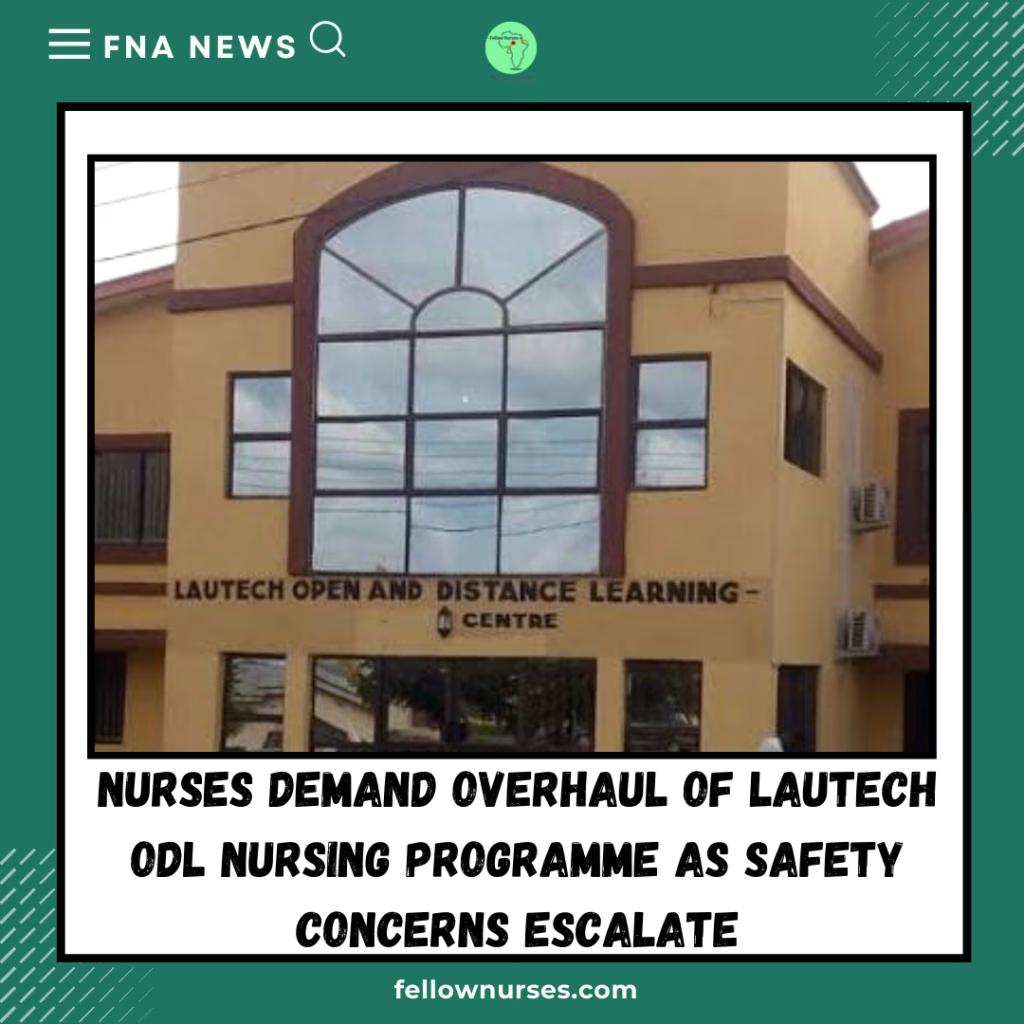
Nurses Intensify Demands for Overhaul of LAUTECH ODL Nursing Programme as Safety Concerns Escalate
24 February 2026 — In the aftermath of the 22 February road accident that claimed the lives of six final-year students in Ladoke Akintola University of Technology’s (LAUTECH) Open and Distance Learning (ODL) Bachelor of Nursing Science programme, professionals across Nigeria’s nursing community are voicing pointed calls for fundamental reform warning that the current centralised model is no longer tenable.
The victims, all practising registered nurses, were travelling to the university’s sole main campus in Ogbomoso, Oyo State, for mandatory face-to-face facilitation and semester examinations when the crash occurred. While no one disputes that road traffic accidents can happen anywhere on Nigeria’s challenging highways, nurses argue that the programme’s repeated requirement for long-distance physical attendance places working professionals many of them mothers and primary caregivers at avoidable risk.
👉 Join our Whatsapp channel Here
Across multiple professional platforms, reactions have shifted from mourning to resolute advocacy. Contributors stress that LAUTECH bears no responsibility for poor road infrastructure, yet it must urgently address the structural deficiencies in its ODL offering. “It is high time LAUTECH considers opening branches in the six geopolitical zones,” one nurse wrote. “The loss of lives on that route is too much. If they cannot, then distance should not be a disadvantage to applicants.”
Others point to proven alternatives. Multiple voices urge the university to adopt fully online examinations, citing Ahmadu Bello University (ABU) Zaria’s Nursing Science programme, which sources local contacts for practicals and Objective Structured Clinical Examinations (OSCEs) within students’ places of residence or choice. “We run online courses with foreign schools why should our own be different?” asked one contributor. “Why must we wait for loss of lives before doing the needful?”
Anecdotal accounts shared on platforms further underscore the pattern. Nurses recall previous incidents during travel for examinations or administrative processes, including the loss of a course mate in an accident while collecting documents, and cases where students were kidnapped and had to be ransomed through collective contributions. “This is not the first time such is happening,” one former student noted, “although not as severe as this.”
While acknowledging that institutions such as the University of Ibadan and Obafemi Awolowo University also require some on-campus presence for ODL examinations, advocates maintain that LAUTECH’s model is particularly burdensome for a national intake of working nurses. Several highlight that ABU is already gaining traction among nurses in Lagos and other urban centres precisely because of its more flexible, safer approach.
The central demand is consistent: LAUTECH’s ODL management should establish at least one study or examination centre in each geopolitical zone and expand digital assessment options to minimise travel especially for practical components. “This is long overdue,” participants argue. “The only solution now is to avoid reoccurrence by creating centres… Honestly, this is too bad.”
As of 24 February, LAUTECH management has issued no public statement on the tragedy or any commitment to decentralisation. The National Association of Nigerian Nurses and Midwives (NANNM) has similarly remained silent, drawing criticism for its apparent failure to champion safer pathways for members pursuing continuing education.
Nigeria’s nursing workforce already contends with acute shortages, burnout, and outward migration. Forcing dedicated professionals to gamble their lives and those of their unborn children simply to upgrade qualifications is, in the view of many, indefensible when technology and decentralised models exist elsewhere. Stakeholders emphasise that true open and distance learning must prioritise accessibility and safety not repeated exposure to hazard.
The message from the nursing community is clear and increasingly unified: enough destinies have been cut short. Until LAUTECH implements satellite campuses, regional centres, online examinations, and local practical arrangements, many are prepared to reconsider participation in the programme. The time for incremental change has passed; decisive action is now required to protect future generations of Nigerian nurses.
👉 Join our Whatsapp channel Here
Fellow Nurses Africa is the independent voice of African nursing, we educate, inform and support nurses across Africa

Kehinde Oluwatosin is one of the many editors here at Fellow Nurses Africa and fellownurses.com.
He is a registered nurse with a Master of Science degree in healthcare leadership from the University of Hull, United Kingdom. Kehinde is passionate about advancing the nursing profession across Africa. As Co-Founder of Fellow Nurses Africa, he plays a key role in shaping editorial direction, ensuring our content educates, informs, and empowers nurses continent-wide.
With expertise in leadership, patient flow, and healthcare operations, Kehinde brings valuable insights to nursing news, career development, and policy discussions. He is committed to amplifying the voice of African nurses and driving positive change in the profession.