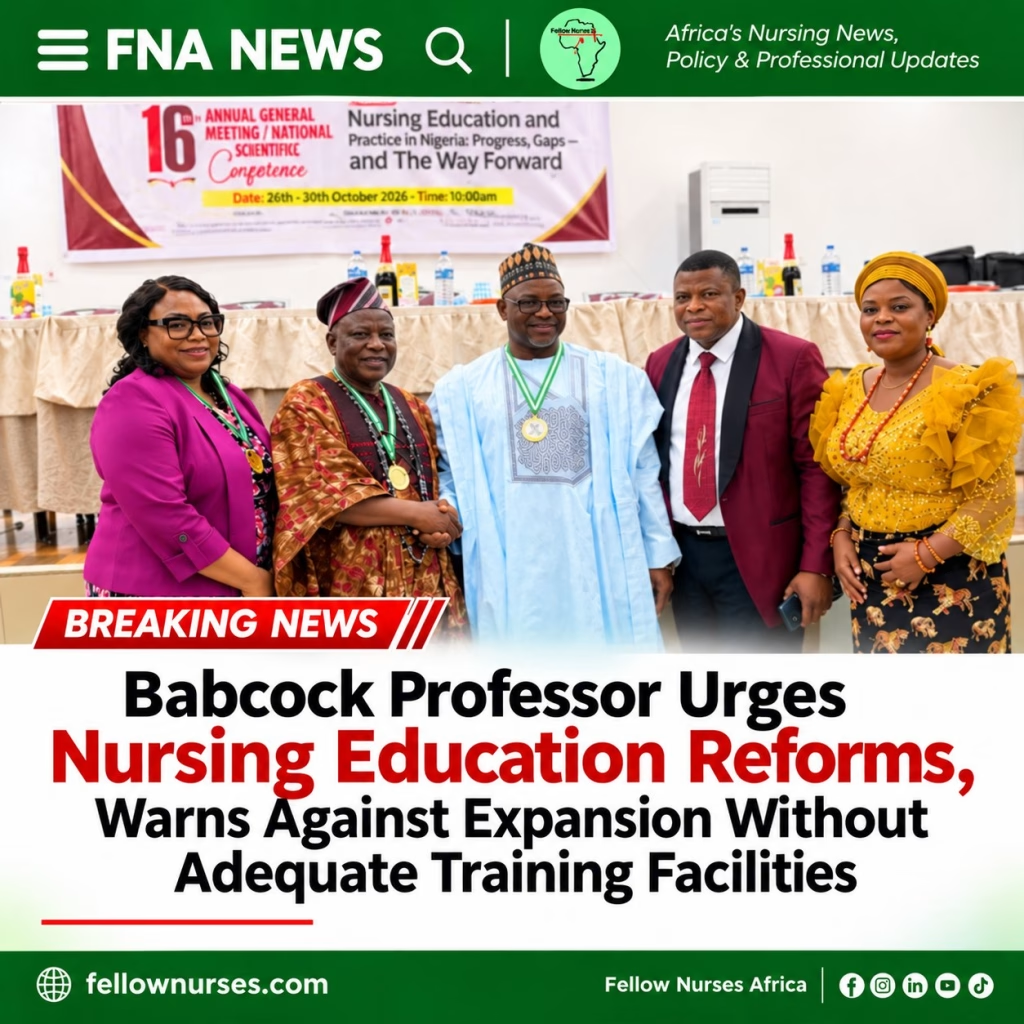
Babcock Professor Urges Nursing Education Reforms, Warns Against Expansion Without Adequate Training Facilities
FNA NEWS, 27th Of NOVEMBER, 2026
A professor at Babcock University has called for comprehensive reforms in Nigeria’s nursing education and professional practice, warning that increasing student enrolment without adequate investment in training facilities and qualified educators could undermine the quality of nursing graduates and patient care.
👉 Join Fellow Nurses Africa on WhatsApp
Prof. Foluso Ojewole, Associate Vice President for Research, Innovation and International Collaboration at Babcock University, made the call while presenting a paper titled “Nursing Education and Practice in Nigeria: Progress, Gaps, and the Way Forward.”
She delivered the presentation at the 16th Annual General Meeting and National Scientific Conference of General Private Nursing Practitioners in Nigeria, held at the Conference Hotel in Abeokuta, Ogun State.
Nursing education records progress, but gaps remain
Ojewole acknowledged that Nigeria’s nursing profession had recorded significant progress in recent years, particularly in educational and professional development.
She highlighted the transition from diploma programmes to National Diploma (ND), Higher National Diploma (HND) and bachelor’s degree pathways, alongside the expansion of postgraduate nursing education.
According to her, these developments have created more opportunities for academic advancement and professional growth.
She also identified the increasing use of simulation technologies, digital learning platforms and modern teaching tools as positive developments in nursing education.
The professor further acknowledged the efforts of the Nursing and Midwifery Council of Nigeria (NMCN) in strengthening standards for nursing education and professional practice.
She described the National Strategic Directions for Nursing and Midwifery 2025–2030 as an important framework for advancing education, regulation, workforce development and healthcare delivery.
However, she warned that significant challenges continue to affect the quality and effectiveness of nursing education in the country.
These include inadequate clinical training infrastructure, shortages of qualified nurse educators, limited access to modern healthcare technology and a disconnect between classroom instruction and clinical practice.
Professor warns against expanding nursing admissions without investment
👉 Join Fellow Nurses Africa on WhatsApp
One of the major concerns raised by Ojewole was the expansion of student enrolment without corresponding investment in the resources required to train competent nurses.
She warned that increasing admission capacity without adequate classrooms, laboratories, qualified lecturers and clinical placement opportunities could compromise educational standards.
This raises an important question for nursing education stakeholders: can institutions continue to admit more students without first ensuring that their training environments can adequately support them?
The quality of nursing education cannot be measured by admission numbers or the number of graduates produced alone. It must also reflect the clinical competence, professional judgement and practical readiness of those entering the workforce.
Calls for stronger clinical training and mentorship
To address the existing gaps, Ojewole advocated regular curriculum reviews and the integration of technology and artificial intelligence into nursing education.
She also called for stronger partnerships between nursing institutions and healthcare facilities.
According to her, structured mentorship and preceptorship programmes are essential to bridging the gap between theoretical knowledge and practical patient care.
Such programmes would provide students with more opportunities to develop clinical competence, strengthen their decision-making abilities and prepare them for safe professional practice.
She further advocated increased investment in simulation laboratories, electronic health records, computer facilities and e-learning platforms to improve teaching, learning and clinical preparation.
Nurse migration and poor working conditions remain concerns
The professor also identified the migration of experienced nurses as a major challenge affecting Nigeria’s healthcare workforce.
She noted that the search for better remuneration and working conditions abroad had contributed to staffing shortages in healthcare facilities.
The effects extend beyond patient care. The loss of experienced nurses also affects nursing education, as institutions face difficulties retaining qualified educators and clinical professionals.
Ojewole therefore urged government and healthcare administrators to improve nurses’ remuneration, working conditions and professional incentives to discourage migration.
She also emphasised the need for greater nursing representation in healthcare leadership and policy formulation, alongside stronger enforcement of professional standards and sustained efforts to eliminate quackery.
Calling for collective action, she maintained that government, regulatory agencies, educational institutions, healthcare providers and professional associations must work together to address the challenges.
She said:
“Government, regulatory bodies, and educational institutions should ensure nursing education is competency-based, evidence-driven, technology-enabled, and aligned with global best practices.”
What this means for Nigeria’s nursing profession
👉 Join Fellow Nurses Africa on WhatsApp
The concerns raised by Ojewole highlight an important distinction between expanding access to nursing education and strengthening the quality of nursing training.
While increasing the number of trained nurses is important in addressing workforce shortages, expansion without adequate infrastructure, qualified educators and supervised clinical experience could create another challenge for the healthcare system.
Nigeria needs more nurses, but it equally needs nurses who are adequately trained, clinically competent and prepared to deliver safe, evidence-based care.
The conversation around nursing education must therefore extend beyond the number of institutions approved, admission quotas and graduates produced. It must also address the quality of clinical exposure, availability of specialist educators, learning resources and the transition from student to competent practitioner.
Equally important is the need to retain experienced nurses. Investments in nursing education may not deliver their full value if the healthcare system cannot provide an environment that encourages qualified professionals to remain and contribute their expertise.
Ultimately, strengthening nursing education requires more than curriculum changes. It demands sustained investment in the people, facilities and professional structures that support nursing practice.
The goal should not simply be to produce more nurses, but to build a competent, adequately supported and sustainable nursing workforce capable of meeting Nigeria’s healthcare needs.
👉 Join Fellow Nurses Africa on WhatsApp
Fellow Nurses Africa is the independent voice of African nursing, we educate, inform and support nurses across Africa.

Durowoju Abisola is a registered nurse, nurse writer and On-Air Correspondent at Fellow Nurses Africa (FNA), passionate about nursing leadership, health education and advocacy.
Through journalism, storytelling and content creation, she amplifies important conversations around nursing, healthcare and the experiences of nurses in Nigeria. She is committed to using her voice and professional knowledge to educate the public, challenge misconceptions and inspire the next generation of nurses.
 ✓
Did you know that we're the accredited ReMar NCLEX Training Centre in Nigeria with Prof. Regina Callion?
Prepare and pass your NCLEX-RN / NCLEX-PN with official ReMar Review curriculum, Regina Callion video lectures, Quick Facts, and dedicated clinical mentorship right here in Nigeria.