The debate over malaria treatment in Nigeria has taken a new turn after the United States Centers for Disease Control and Prevention (CDC) updated its recommendation for artemether-lumefantrine (AL).
FNA NEWS,26th of August 2026
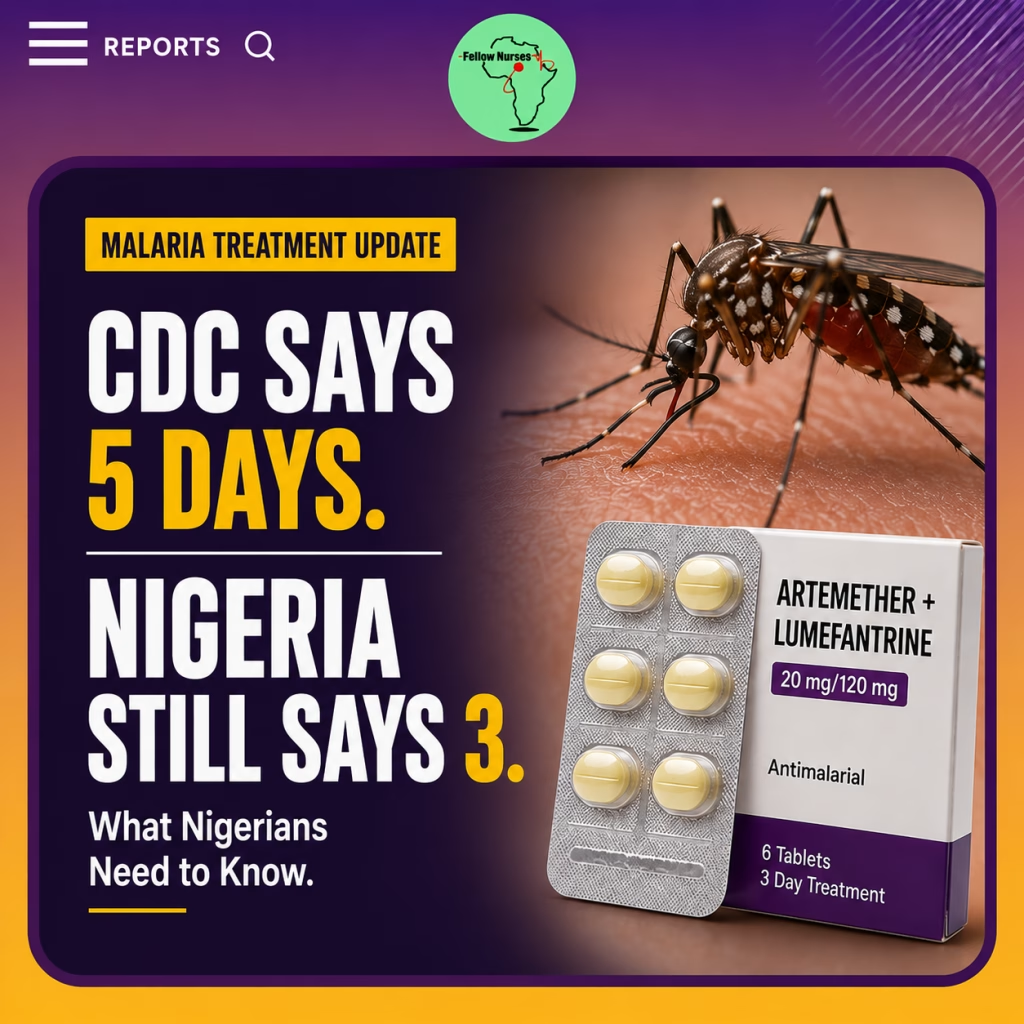
CDC Recommends Five-Day Malaria Treatment in the US: Why Nigeria Still Uses Three Days
👉 JOIN FNA NEWS
A new malaria treatment recommendation from the United States has sparked questions in Nigeria.
The U.S. Centers for Disease Control and Prevention (CDC) now recommends a five-day course of artemether-lumefantrine (AL) for uncomplicated Plasmodium falciparum malaria treated in the United States, replacing the traditional six-dose regimen given over three days.
But this does not automatically change Nigeria’s malaria treatment guidelines.
What Is Nigeria’s Position?
Nigeria’s malaria treatment policy is coordinated through the National Malaria Elimination Programme (NMEP) under the Federal Ministry of Health and Social Welfare.
Nigeria’s established treatment guideline recommends artemisinin-based combination therapies, including artemether-lumefantrine, for uncomplicated malaria. The standard AL regimen remains six doses over three days.
Therefore, Nigerians should not independently extend their malaria treatment from three to five days because of the new U.S. recommendation.
Why Are the Recommendations Different?
The difference reflects the fact that malaria treatment policies are developed for specific populations and settings.
👉 JOIN FNA NEWS https://whatsapp.com/channel/0029Vb5pewm8aKvTTHLmWn2L
The United States and Nigeria have very different malaria epidemiology. Most malaria cases treated in the U.S. are associated with travel or migration, while Nigeria has sustained local malaria transmission.
Treatment decisions can also depend on parasite susceptibility, drug resistance, treatment outcomes and patient characteristics.
The CDC’s update therefore does not mean that the three-day regimen has suddenly become ineffective everywhere.
Should Nigeria Consider the Five-Day Regimen?
The development deserves attention from Nigerian malaria experts and policymakers.
Rather than immediately adopting the U.S. recommendation, Nigeria should continue monitoring treatment outcomes, therapeutic efficacy and antimalarial resistance. If Nigerian evidence eventually supports a longer regimen, the national malaria programme can review and update its guidelines.
This is an important principle in public health: international recommendations should be considered, but local evidence must guide local policy.
What Should Nigerians Do Now?
Nigerians should not change their malaria treatment regimen on their own because of the CDC update.
Patients diagnosed with uncomplicated malaria should follow the treatment prescribed by a qualified healthcare professional and the current Nigerian guidelines.
The real question is not simply whether three days or five days is better.
It is:
Which regimen provides the safest and most effective treatment for Nigerians, based on the evidence available in Nigeria?
For now, the U.S. has moved to five-day artemether-lumefantrine treatment, while Nigeria’s established national regimen remains three days. Any change in Nigeria should come through the appropriate national malaria policy and guideline process.
👉 JOIN FNA NEWS https://whatsapp.com/channel/0029Vb5pewm8aKvTTHLmWn2L
Fellow Nurses Africa is the independent voice of African nursing, we educate, inform and support nurses across Africa.

Durowoju Abisola is a registered nurse, nurse writer and On-Air Correspondent at Fellow Nurses Africa (FNA), passionate about nursing leadership, health education and advocacy.
Through journalism, storytelling and content creation, she amplifies important conversations around nursing, healthcare and the experiences of nurses in Nigeria. She is committed to using her voice and professional knowledge to educate the public, challenge misconceptions and inspire the next generation of nurses.