
Fellow Nurses Africa | Lagos, Nigeria | 20 January, 2026
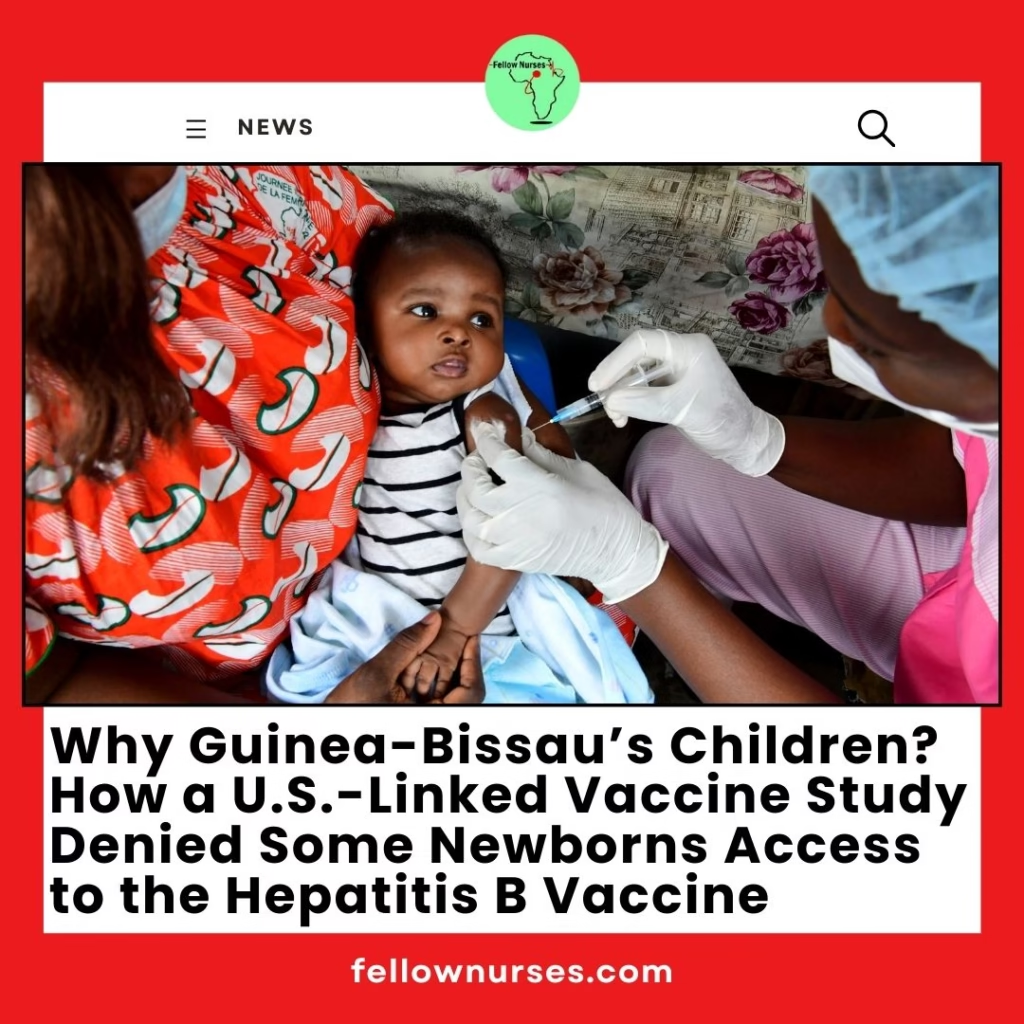
When lifesaving vaccines already exist, why are Guinea Bissau newborns being placed at the center of controversial research? And who is meant to protect them?
Why Guinea-Bissau?
When news broke that a U.S.-funded hepatitis B vaccine timing study involving newborns in Guinea-Bissau had been halted following ethical concerns, one question dominated public discourse:
Hepatitis B vaccines are not experimental. The birth-dose vaccine is globally recognized as a critical, lifesaving intervention that prevents chronic liver disease and liver cancer later in life. So why design a study that questions whether delaying this protection is acceptable and why test that question on African newborns?
This is not a question of science alone. It is a question of power.
A Study That Triggered Global Alarm
The proposed study sought to compare outcomes between infants who received the hepatitis B vaccine at birth and those who received it later. While framed as research into vaccine timing, critics across Africa and beyond raised urgent concerns:
- A proven intervention was being withheld from some newborns
- The study would likely not be approved in the U.S. or Europe
- The research targeted a low-income country with limited regulatory leverage
African public-health leaders publicly questioned the ethical foundation of the trial, asking why African children were being used to answer questions that wealthy countries had already resolved.
Consent: Legal on Paper, Ethical in Practice?
Supporters of the study point to informed parental consent. But global health ethics experts argue that consent in vulnerable settings is complex.
True informed consent requires:
- Full understanding of risks and alternatives
- Freedom from pressure or inducement
- The ability to say “no” without consequences
In countries where healthcare access is fragile and trust in medical authority is high, critics argue that consent can become procedural rather than meaningful.
This is why international ethical standards emphasize not just consent, but justice, asking whether a study fairly distributes risk and benefit.
The Question Many Won’t Ask Aloud
Public reaction has centered on a blunt but unavoidable question:
Would this study ever be conducted on white children in high-income countries?
The answer, according to many bioethicists, is no.
In the U.S., delaying a known protective vaccine in newborns would face:
- Immediate ethics board rejection
- Legal challenges
- Media scrutiny
- Political backlash
That contrast is what fuels accusations of double standards in global health research.
What Did the Guinea-Bissau Government Do?
Facing mounting pressure, Guinea-Bissau’s authorities cancelled the neonatal hepatitis B vaccine study, citing ethical and logistical concerns, while reaffirming commitment to routine childhood immunization.
The decision was welcomed but it also exposed a deeper issue.
Many African health systems remain financially dependent on donor-funded programs, limiting how freely governments can push back against powerful international institutions.
The cancellation answered one question but raised many others.
The Silence of Healthcare Professionals
Perhaps the most troubling aspect is the role of healthcare practitioners.
Why do studies like this move forward without louder resistance from within the system?
- Hierarchical decision-making that excludes frontline workers
- Fear of job loss or professional retaliation
- Chronic underfunding that makes research participation financially attractive
- Ethics approvals that shift responsibility away from individuals
This does not absolve complicity but it reveals a system where silence is often safer than advocacy.
A Pattern Africa Knows Too Well
From historical abuses to modern clinical trials, Africa’s relationship with global medical research is marked by repeated ethical tension.
The Guinea-Bissau case is not an isolated incident. It is a reminder that progress in medicine must never come at the cost of dignity, equity, or children’s lives.
Why This Matters Beyond Guinea-Bissau
This case should concern every African government.
If one country can be targeted for ethically questionable research today, another can be tomorrow.
Public-health experts argue that African nations must:
- Strengthen independent ethics review boards
- Demand research parity with high-income countries
- Empower healthcare workers to speak without fear
- Place community protection above donor pressure
The Bottom Line
Scientific advancement is important, vaccines save lives,cresearch matters, but no child should be placed at risk to answer questions already settled elsewhere.
Guinea-Bissau’s children are not test subjects. Neither are Africa’s.
The world is watching and African governments must now decide who truly sets the terms of research on their soil.

Kehinde Oluwatosin is one of the many editors here at Fellow Nurses Africa and fellownurses.com.
He is a registered nurse with a Master of Science degree in healthcare leadership from the University of Hull, United Kingdom. Kehinde is passionate about advancing the nursing profession across Africa. As Co-Founder of Fellow Nurses Africa, he plays a key role in shaping editorial direction, ensuring our content educates, informs, and empowers nurses continent-wide.
With expertise in leadership, patient flow, and healthcare operations, Kehinde brings valuable insights to nursing news, career development, and policy discussions. He is committed to amplifying the voice of African nurses and driving positive change in the profession.