
UK Retains Five-Year ILR Route for Nurses, Doctors and Eligible Care Workers as Settlement Wait Rises to 10 Years
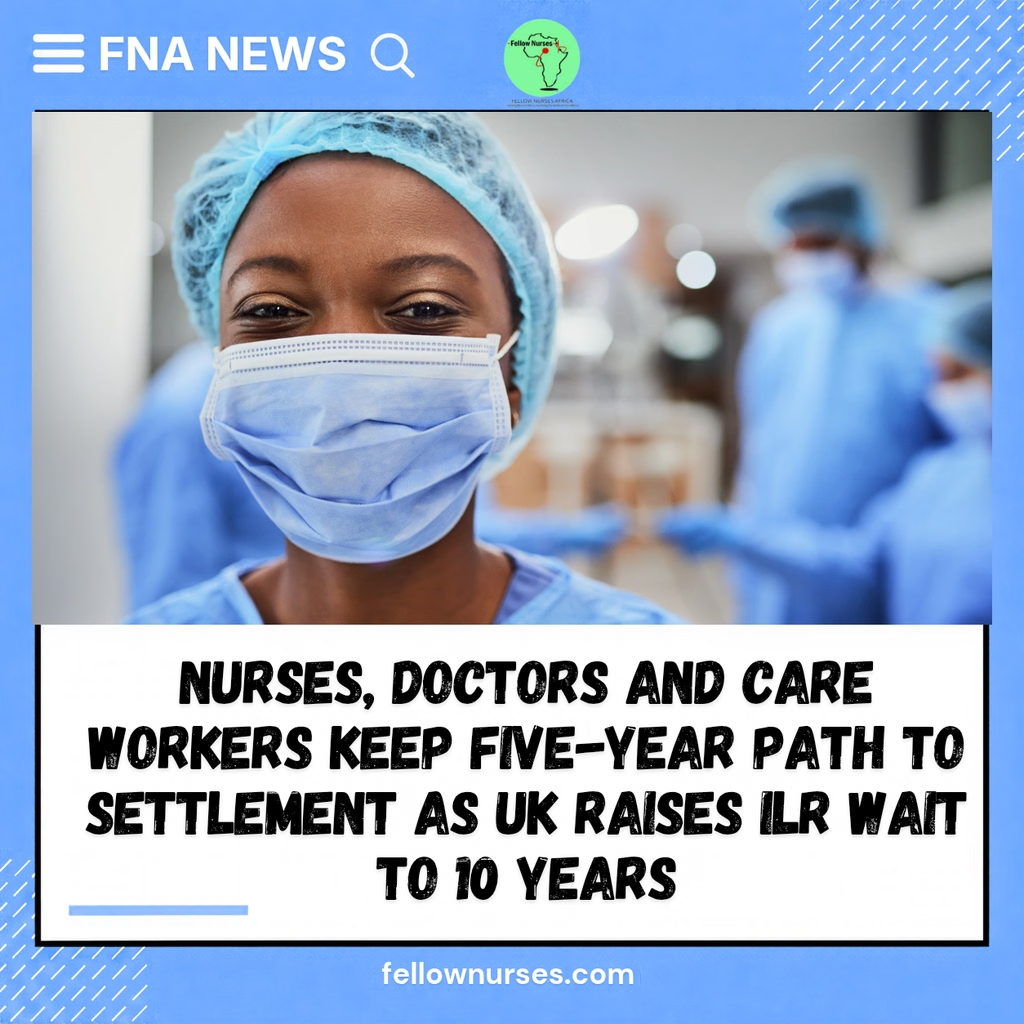
The UK government has confirmed that nurses, doctors and eligible care workers will retain a five-year route to permanent settlement, despite plans to double the standard waiting period for most other migrants.
By FNA News | 2 November 2026
The United Kingdom has confirmed that qualifying nurses, doctors and social care workers will continue to have a five-year pathway to indefinite leave to remain (ILR), offering significant reassurance to thousands of international healthcare professionals.
Home Secretary Shabana Mahmood announced the decision in the House of Commons on Monday, 2 November 2026, as part of the government’s new Earned Settlement policy.
Under the reforms, the standard qualifying period for permanent residence will increase from five to ten years for most migrants.
However, the government has introduced exceptions recognising the contribution of healthcare professionals, teachers and certain other essential workers.
👉 Join Fellow Nurses Africa on WhatsApp
The announcement follows months of consultation and concerns that longer settlement periods could discourage international healthcare workers from remaining in the UK.
Nurses and doctors retain five-year settlement pathway
Under the new policy, qualifying healthcare professionals, including registered nurses and doctors working in recognised public-service roles, will continue to be eligible to apply for permanent settlement after five years.
The government said these professions deserve recognition because of their contribution to public services.
This means eligible nurses and doctors will not automatically be placed on the new ten-year pathway simply because they earn less than the higher-income threshold applicable to other migrants.
Workers earning more than £50,271 annually will also qualify for a five-year route, while those earning over £125,000 and some individuals on specialist talent routes may qualify after three years.
However, settlement will not be automatic. Applicants must still satisfy the relevant immigration, residency, employment and character requirements.
The detailed Immigration Rules will determine the precise eligibility of individual occupations and employment arrangements.
Care workers already in the UK receive significant protection
One of the most important aspects of the announcement concerns overseas care workers who moved to the UK during a period of intense recruitment following the COVID-19 pandemic.
The government had previously considered extending the settlement waiting period to 15 years for some lower-skilled workers, including care workers.
That proposal has now been withdrawn.
Instead, social care workers who joined the relevant route before the government’s immigration white paper in May 2025 will be able to retain the five-year settlement pathway if they meet specified conditions.
These include earning at least £25,000 annually in qualifying social care employment and complying with their visa conditions.
The protection is particularly significant for workers who have spent several years building their lives and careers in the UK.
The Home Secretary acknowledged the contribution made by overseas care workers during a period when the country’s social care system faced severe staffing pressures.
The revised policy also provides transitional protection for certain other healthcare and education workers, including qualifying nursing auxiliaries.
A second opportunity for care workers facing difficulties
Not every care worker already in the UK will qualify for settlement after five years.
According to the Home Secretary, approximately one-quarter of workers in the relevant earlier care migration cohort have not fulfilled the conditions needed for the protected route.
The government plans to offer eligible individuals in this group an opportunity to apply for a further five-year care visa.
Importantly, these workers will not have to remain tied to their previous employer under the proposed arrangement.
This is intended to help workers affected by exploitation or sponsorship problems secure legitimate employment.
The Home Office says around 1,800 employers have already lost their licences to sponsor overseas workers because of exploitation and other abuses.
Workers who complete the additional qualifying period and meet the necessary conditions may subsequently apply for permanent settlement.
The precise application arrangements will depend on the Immigration Rules introduced to implement the policy.
What changes for other UK migrants?
For most migrants outside the protected categories, the standard settlement period will increase to ten years.
The government is also introducing stricter conditions intended to assess whether applicants have made a sustained contribution to the country.
These include:
- Meeting stricter criminal-record requirements.
- Demonstrating a high standard of English.
- Having no outstanding debt to the British taxpayer.
- Showing at least three years of National Insurance contributions.
- Meeting the relevant lawful-residence and immigration requirements.
Longer settlement periods will apply in certain cases involving immigration breaches or irregular entry.
The government maintains that permanent residence should reflect an individual’s contribution and compliance with immigration laws rather than time spent in the country alone.
What does this mean for African nurses planning to relocate to the UK?
For nurses and doctors in Nigeria, Ghana, Kenya, Zimbabwe and other African countries, the announcement provides greater clarity about the future of settlement for qualifying healthcare professionals.
Eligible nursing and medical roles will continue to offer a five-year route to permanent residence, subject to the final rules and individual requirements.
However, there is an important distinction between registered healthcare professionals and social care workers.
The UK closed its overseas recruitment route for new care workers and senior care workers on 22 July 2025.
Consequently, the latest settlement announcement does not reopen overseas care worker recruitment or automatically make applicants outside the UK eligible for care worker visas.
Registered nurses and doctors may still pursue eligible Health and Care Worker visa opportunities, provided they meet professional registration, sponsorship, salary and immigration requirements.
For African healthcare professionals considering relocation, understanding the difference between a registered nursing position and a care worker role is therefore essential.
Applicants must also consider whether their dependants qualify under the relevant immigration and settlement provisions.
Why the decision matters for healthcare workforce retention
The five-year exemption represents an important recognition of the contribution made by internationally recruited healthcare professionals.
Many overseas nurses and care workers have established careers, raised families and made long-term financial commitments based on their understanding of the UK’s immigration system.
Extending settlement periods for workers already established in the country could have created further uncertainty and affected staff retention.
NHS Employers had previously warned that changes to settlement arrangements could affect workforce stability, recruitment and the confidence of international staff.
The revised government position addresses some of these concerns.
Nevertheless, the distinction between different healthcare occupations raises wider questions about how the UK recognises essential workers, particularly those in lower-paid patient-facing roles.
For Fellow Nurses Africa, the announcement also highlights the importance of immigration policies that recognise the contributions of internationally educated nurses while providing clear and predictable routes to professional and personal stability.
When will the new ILR rules take effect?
The reforms are expected to be introduced in 2027, but the announcement does not mean every new provision took legal effect on 2 November 2026.
The government must still implement the changes through the formal Immigration Rules.
Until the relevant changes take effect, applicants should follow the rules currently in force.
The government has also confirmed that people who already hold indefinite leave to remain will not lose their settled status because of these reforms.
Healthcare professionals approaching settlement eligibility should check official Home Office updates and obtain advice from a regulated immigration adviser where necessary.
For international nurses and doctors, the central message is clear: the UK intends to preserve a five-year settlement pathway for qualifying healthcare professionals, even as it tightens the wider immigration system.
Whether the reforms ultimately strengthen healthcare recruitment and retention will depend on how the policy is implemented and the protections available to workers and their families.
FNA News will continue to monitor developments and provide updates as they emerge.
👉 Join Fellow Nurses Africa on WhatsApp
Fellow Nurses Africa is the independent voice of African nursing, we educate, inform and support nurses across Africa.
Sources: UK Home Office – Earned Settlement Statement, 2 November 2026; Home Office announcement; UK Government – Applying for Health and Social Care Jobs from Abroad.

Kehinde Oluwatosin is one of the many editors here at Fellow Nurses Africa and fellownurses.com.
He is a registered nurse with a Master of Science degree in healthcare leadership from the University of Hull, United Kingdom. Kehinde is passionate about advancing the nursing profession across Africa. As Co-Founder of Fellow Nurses Africa, he plays a key role in shaping editorial direction, ensuring our content educates, informs, and empowers nurses continent-wide.
With expertise in leadership, patient flow, and healthcare operations, Kehinde brings valuable insights to nursing news, career development, and policy discussions. He is committed to amplifying the voice of African nurses and driving positive change in the profession.