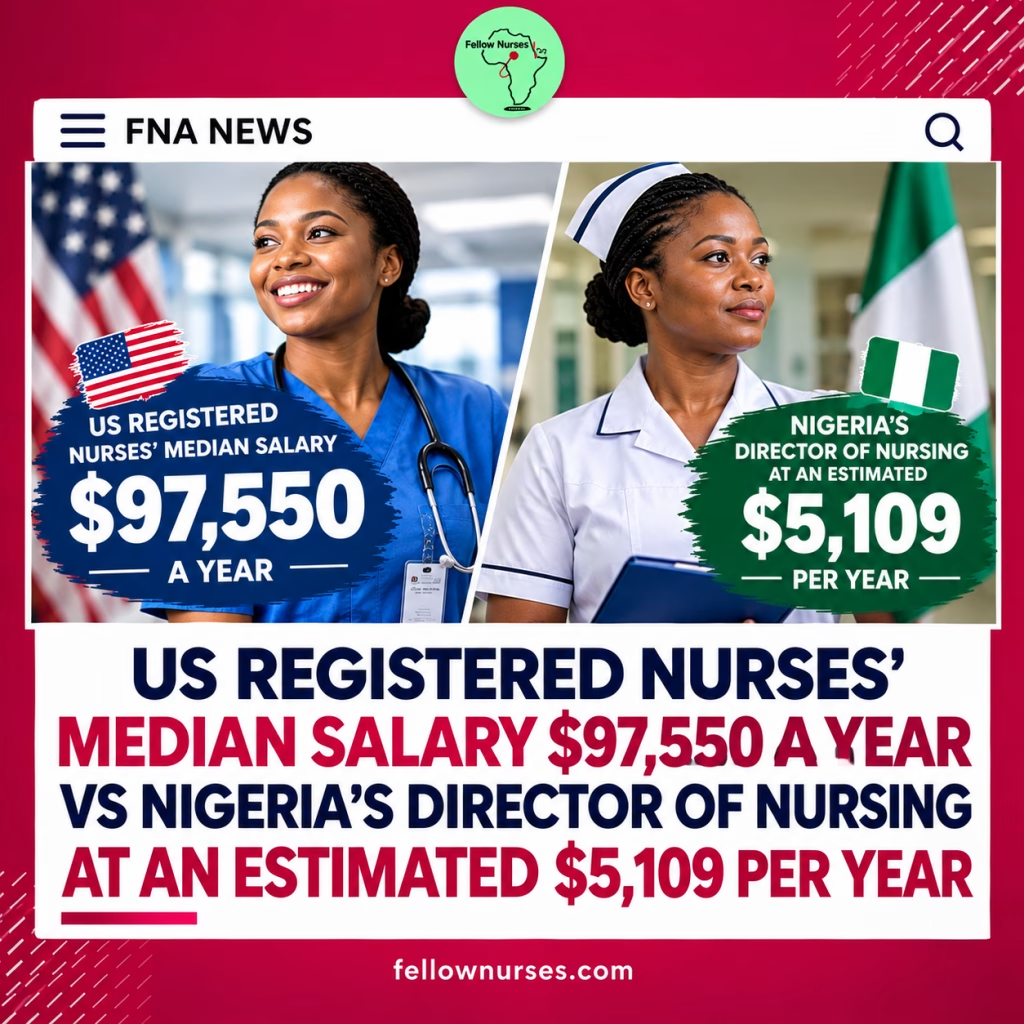
US Registered Nurses’ median Salary $97,550 a Year vs Nigeria’s Director of Nursing at an Estimated $5,109
FNA NEWS, 9th Of October, 2026
US Registered Nurses Earn $97,550 Median Annual Wage as Nigerian Nursing Salary Figures Highlight Pay Gap
👉 Join Fellow Nurses Africa on WhatsApp
US nurses earned a median annual wage of $97,550 in May 2025, according to the US Bureau of Labor Statistics. In Nigeria, salary figures supplied for nursing officers list the Director of Nursing at ₦566,258 monthly, equivalent to ₦6.8 million annually, highlighting questions about nursing remuneration, career progression and workforce retention.
Registered nurses in the United States earned a median annual wage of $97,550 in May 2025, according to the US Bureau of Labor Statistics (BLS). The agency also projects continued growth in demand for nurses over the next decade.
The figures offer a basis for examining differences in nursing remuneration between the United States and Nigeria, where supplied salary figures show monthly earnings rising from ₦155,990 for a Nursing Officer II to ₦566,258 for a Director of Nursing.
Using the supplied Nigerian figures, the Director of Nursing’s annual salary is approximately ₦6.8 million. The headline estimate of $5,109 represents a dollar equivalent, not a separately verified US-dollar salary. The exchange rate used for that conversion should be confirmed before publication.
The comparison raises important questions about how nurses are paid, how career progression is rewarded and whether remuneration adequately reflects the responsibilities of nursing professionals.
US Registered Nurses Earn a Median $97,550 Annually
The BLS Occupational Outlook Handbook, updated on 27 August 2026, reports that registered nurses in the United States earned a median annual wage of $97,550 in May 2025. This is equivalent to approximately $46.90 an hour.
The median is the midpoint of the earnings distribution. Half of registered nurses earned more than this amount, while the other half earned less.
Earnings also varied by healthcare setting. Government establishments, excluding state and local education and hospitals, recorded a median annual wage of $110,780 for registered nurses.
Nurses working in hospitals earned a median of $100,220 annually, while those in ambulatory healthcare services earned $91,230.
The median annual wage was $84,300 for nurses working in nursing and residential care facilities and $78,620 for those employed in educational services.
These figures demonstrate that nurses’ earnings in the United States vary according to their employment setting. The national median should not be interpreted as a guaranteed salary for every registered nurse.
US Nursing Employment Projected to Grow by 6 Per Cent
Beyond wages, the BLS projects that employment of registered nurses will grow by 6 per cent between 2025 and 2035. This is faster than the projected 3 per cent growth across all occupations.
The agency estimates approximately 180,800 openings for registered nurses each year over the decade.
Many of these openings are expected to arise as nurses retire, leave the workforce or move into other occupations. The figures therefore reflect both employment growth and the need to replace existing workers.
The BLS identifies population ageing and the increasing need to manage chronic conditions, including diabetes and obesity, among the factors supporting demand for nursing services.
Employment opportunities are expected across hospitals, outpatient facilities and home healthcare services.
The projections point to the continuing importance of nursing in the US healthcare workforce. However, employment growth does not mean every nurse will receive the same salary or have identical opportunities.
Nigerian Nursing Salary Figures Show Progression Across Professional Ranks
👉 Join Fellow Nurses Africa on WhatsApp
The Nigerian salary figures supplied for this report show increasing monthly earnings across several nursing grades and management positions.
At the entry level, a Nursing Officer II (NO II) is listed at ₦155,990 monthly, equivalent to ₦1,871,880 annually.
A Nursing Officer I (NO I), associated with approximately three years in service, is listed at ₦174,566 monthly or ₦2,094,792 annually.
At the Senior Nursing Officer (SNO) level, the monthly figure rises to ₦199,076, equivalent to ₦2,388,912 annually. A Principal Nursing Officer (PNO), associated with approximately nine years in service, is listed at ₦228,813 monthly or ₦2,745,756 annually.
The figures continue to rise at more senior levels:
- Assistant Chief Nursing Officer (ACNO): ₦264,310 monthly, or ₦3,171,720 annually.
- Chief Nursing Officer (CNO): ₦306,344 monthly, or ₦3,676,128 annually.
- Assistant Director of Nursing (ADN): ₦360,706 monthly, or ₦4,328,472 annually.
- Director of Nursing (DN): ₦566,258 monthly, or ₦6,795,096 annually.
The supplied figures associate the Chief Nursing Officer position with approximately 15 years in service and the Director of Nursing level with 21 or more years.
However, these figures should be treated as reported estimates until the applicable salary structure, grade levels, steps, employer and effective date are confirmed. It is also necessary to establish whether the amounts represent basic salary or total remuneration, including allowances.
Nigeria has different employers and employment arrangements, so one set of figures should not automatically be presented as the salary earned by every nurse nationwide.
What the Salary Comparison Reveals and What It Does Not
The headline comparison places the US median annual wage for registered nurses alongside the estimated annual earnings of a Nigerian Director of Nursing.
It is a striking comparison, but the two figures measure different things.
The US figure represents the median wage across registered nurses, while the Nigerian figure relates to a specific senior professional rank. The comparison is therefore not a direct, like-for-like assessment of equivalent positions.
The countries also differ in living costs, taxation, working hours, employment benefits and the purchasing power of their currencies. Exchange-rate movements can further affect the dollar equivalent of Nigerian earnings.
These factors matter when assessing what nurses can afford, how their earnings compare with those of other professionals and whether their remuneration supports a sustainable standard of living.
Even with these limitations, the figures provide a starting point for a broader discussion about nursing pay, career progression and professional recognition.
Why Nursing Remuneration Matters for Workforce Retention
👉 Join Fellow Nurses Africa on WhatsApp
Nursing remuneration is not simply a question of how much an individual earns. It also relates to how healthcare systems attract, develop and retain qualified professionals.
Nurses undertake clinical assessments, monitor patients, administer treatments, educate families and contribute to patient safety. Senior nurses also take on responsibilities involving supervision, management, service coordination and professional development.
A remuneration structure should therefore be examined alongside the responsibilities attached to each role, the qualifications required, working conditions and opportunities for advancement.
For Nigeria, transparent salary structures and clear progression pathways could help nurses understand how their earnings change with experience, additional qualifications and greater responsibility.
Fair compensation is only one part of workforce retention. Staffing levels, access to continuing professional development, workplace safety, management practices and opportunities for career growth also influence nurses’ decisions to remain in a healthcare system or seek opportunities elsewhere.
The available salary figures alone cannot establish why nurses leave Nigeria or determine the scale of any resulting workforce loss. Such conclusions require additional evidence.
What the Figures Mean for Nigerian Nurses Considering International Practice
The US median wage may attract attention from Nigerian nurses exploring international career opportunities. However, the published figure should not be interpreted as a guaranteed salary for a nurse relocating to the United States.
Actual earnings depend on licensing, qualifications, experience, employer, location, speciality and the role secured. Nurses must also consider relocation expenses, taxes, housing, insurance and other living costs.
International practice involves professional and regulatory requirements, and meeting those requirements does not guarantee employment at the national median wage.
For nurses considering relocation, comparing likely take-home pay and living expenses may provide a more useful picture than comparing headline salaries alone.
For policymakers and healthcare employers, the wider question is how to create conditions in which nurses can develop professionally, receive fair compensation and build sustainable careers.
A Wider Conversation About the Value of Nursing
The BLS projections indicate that nursing will remain an important part of the US healthcare workforce through 2035, with continued demand for registered nurses.
The Nigerian figures, meanwhile, illustrate a reported progression in earnings from entry-level nursing positions to senior management. Their accuracy and national applicability must be established before they can be treated as an authoritative account of current nursing salaries.
For Fellow Nurses Africa, the comparison highlights a broader issue: how healthcare systems value the people responsible for delivering essential patient care.
Reliable salary data, transparent remuneration policies and meaningful opportunities for professional advancement are important to that discussion.
As healthcare needs grow and competition for skilled professionals continues, nursing pay deserves attention not only as an employment issue but also as part of the wider conversation about workforce sustainability and quality healthcare delivery.
👉 Join Fellow Nurses Africa on WhatsApp
Fellow Nurses Africa is the independent voice of African nursing, we educate, inform and support nurses across Africa.

Durowoju Abisola is a registered nurse, nurse writer and On-Air Correspondent at Fellow Nurses Africa (FNA), passionate about nursing leadership, health education and advocacy.
Through journalism, storytelling and content creation, she amplifies important conversations around nursing, healthcare and the experiences of nurses in Nigeria. She is committed to using her voice and professional knowledge to educate the public, challenge misconceptions and inspire the next generation of nurses.