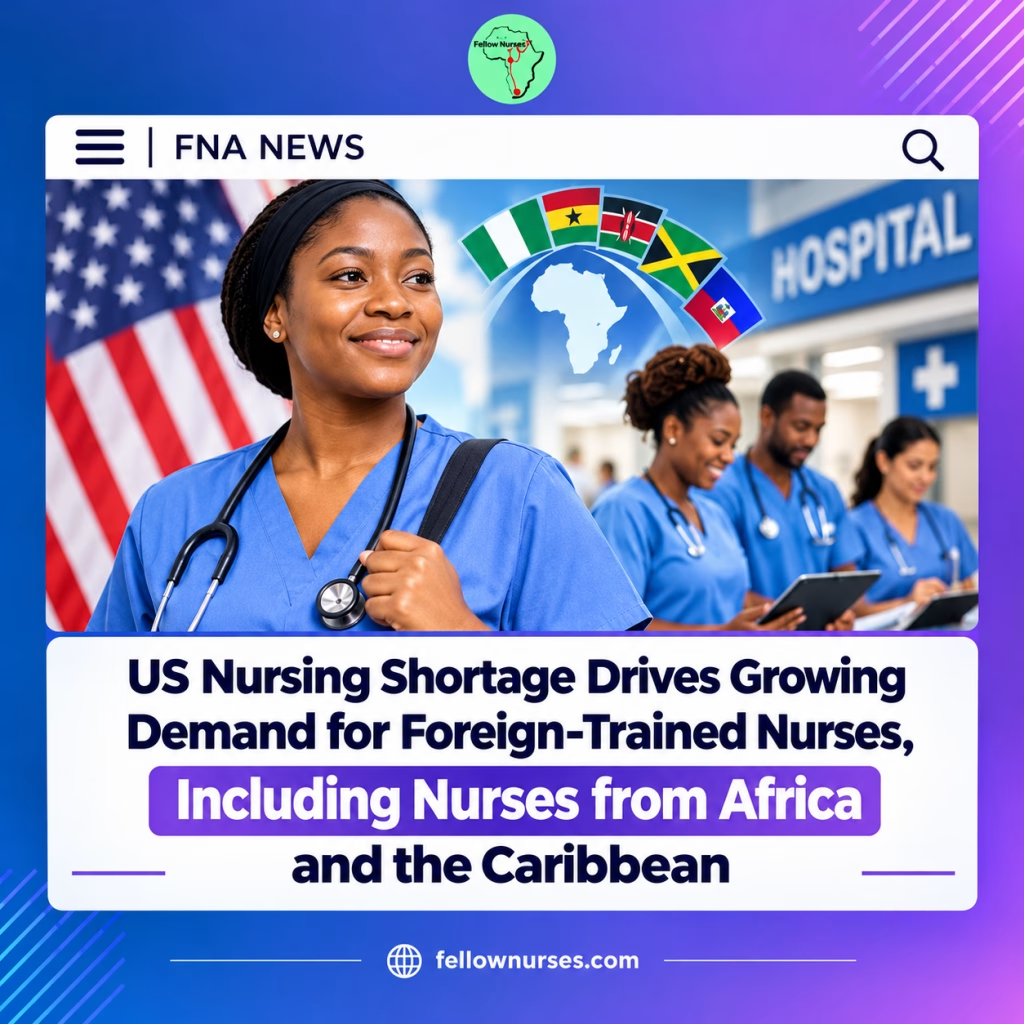
US Nursing Shortage Drives Growing Demand for Foreign-Trained Nurses, Including Nurses from Africa and the Caribbean
FNA NEWS,16th of September, 2026
The United States is increasingly turning to nurses trained outside the country as healthcare providers face continuing demand for registered nurses.
👉 Join Fellow Nurses Africa on WhatsApp
A recent report published by Forbes has highlighted the growing reliance on internationally educated nurses, with the increase particularly visible among nurses from Africa and the Caribbean.
The report, published on September 10, 2026, found that the number of first-time internationally educated candidates taking the US National Council Licensure Examination for Registered Nurses (NCLEX-RN) rose from about 8,600 in 2015 to more than 52,000 in 2025.
The trend provides a useful insight into the changing global movement of nurses — and the increasing role of African and Caribbean-trained professionals in the US healthcare workforce.
African nurses are becoming more visible in the US pipeline
According to the Forbes report, the growth in internationally educated nurses has extended beyond the Philippines, which has historically been one of the major sources of nurses seeking US licensure.
African countries have recorded particularly notable increases.
The number of first-time internationally educated candidates from Kenya taking the NCLEX-RN reportedly increased from 62 in 2015 to more than 4,000 in 2025.
Ghana rose from 70 candidates to more than 2,200 during the same period.
For Nigeria, the number increased from 187 first-time candidates in 2015 to nearly 2,000 in 2025, according to the report. The figures are part of a broader increase in internationally educated nurses entering the US licensure system.
The National Council of State Boards of Nursing (NCSBN), which develops and administers the NCLEX, publishes annual statistics on internationally educated candidates seeking US licensure. Its 2025 examination statistics include country-level data for first-time internationally educated candidates taking the NCLEX-RN for US licensure.
The Caribbean is also part of the growing workforce
The increase is not limited to Africa.
The Forbes report identified the Caribbean as another region contributing to the international nursing pipeline.
Jamaica, which has a longstanding connection with the US healthcare workforce, recorded an increase in first-time internationally educated candidates taking the NCLEX-RN from 295 in 2015 to more than 500 in 2025.
Haiti recorded a larger proportional increase, rising from 26 candidates in 2015 to more than 700 a decade later.
Together, these figures illustrate how the US nursing workforce is becoming increasingly international.
Why does America need more nurses?
👉 Join Fellow Nurses Africa on WhatsApp
The growing demand for internationally educated nurses comes against the backdrop of a significant US nursing workforce requirement.
The US Bureau of Labor Statistics projects that employment of registered nurses will grow by 6% between 2025 and 2035.
It also projects approximately 180,800 openings for registered nurses each year, on average, during that period.
Many of these openings are expected to come from the need to replace nurses who leave the workforce or move into other occupations.
This means the demand is not simply about creating new nursing positions.
The US healthcare system must also continually replace experienced nurses who retire, leave the profession or move elsewhere.
For hospitals and other healthcare facilities, maintaining adequate nursing numbers is essential to sustaining patient care.
Nursing schools face their own capacity challenge
There is another part of the US nursing workforce story that receives less attention.
The country has people seeking nursing education, but nursing schools face challenges in expanding their capacity.
The American Association of Colleges of Nursing (AACN) reported that 93,176 qualified applications — not individual applicants — were not accepted by US nursing schools in 2025.
Schools have cited factors including shortages of faculty, clinical training sites and preceptors, as well as limitations involving classroom space and funding.
This creates a difficult workforce equation.
The US needs more nurses, while nursing schools face constraints that make it difficult to expand the domestic pipeline quickly enough.
Internationally educated nurses therefore represent one part of the workforce response.
What the trend means for Nigerian nurses
For Nigerian nurses, the figures are particularly significant.
The rise in Nigerian candidates taking the NCLEX-RN reflects growing interest in the US as a destination for internationally educated nurses.
However, taking the NCLEX does not automatically mean a nurse has obtained US registration or employment.
Internationally educated nurses must meet the relevant requirements for US nursing licensure, which can vary by state. NCSBN provides guidance on the licensure process for internationally educated nurses, while individual state boards of nursing determine licensing requirements.
For nurses considering the pathway, this distinction is important.
The journey can involve credential evaluation, meeting educational and regulatory requirements, taking the NCLEX-RN and satisfying the requirements of the particular state where the nurse intends to practise.
Opportunity for nurses, challenge for health systems
👉 Join Fellow Nurses Africa on WhatsApp
International migration can create important opportunities for nurses.
For an individual nurse, working abroad may provide access to new clinical environments, professional development, international experience and different employment opportunities.
But the movement also raises questions about the effect of nurse migration on countries that already face health workforce shortages.
This is particularly relevant for countries in Africa and other regions where health systems continue to work to strengthen their nursing workforce.
The World Health Organization has long recognised the complexity of international health worker migration.
Its Global Code of Practice on the International Recruitment of Health Personnel provides principles for ethical recruitment while recognising the rights and interests of both migrant health workers and the countries from which they migrate.
The WHO updated the Code in 2026, including provisions encouraging greater co-investment in health systems and health workforces so that international recruitment can produce benefits for both source and destination countries. That balance is important.
Nurses have the right to pursue professional opportunities, but health systems also need strategies to train, retain and support enough healthcare workers to meet the needs of their populations.
A global nursing workforce is taking shape
The growing number of internationally educated nurses entering the US licensure pipeline points to a broader change in the global nursing workforce.
The US is not the only country recruiting nurses internationally. Healthcare systems across high-income countries are competing for skilled health professionals as populations age and demand for healthcare increases.
For African and Caribbean nurses, international opportunities can offer a pathway to career development.
For countries such as Nigeria, however, the trend also reinforces the importance of strengthening the domestic nursing workforce.
That means improving working environments, supporting professional development, expanding nursing education and ensuring that nurses have meaningful opportunities to build sustainable careers at home.
For the United States, international recruitment can help address immediate workforce needs. But the longer-term challenge remains: building a nursing education and workforce system capable of meeting demand while maintaining fair and ethical recruitment practices.
The growing movement of nurses across borders therefore raises a question that extends beyond migration.
How can countries that need nurses attract and retain them, while ensuring that the global movement of healthcare professionals does not deepen workforce shortages elsewhere?
For nurses from Africa and the Caribbean, the answer will shape not only where they work, but also how the global nursing workforce evolves in the years ahead.
👉 Join Fellow Nurses Africa on WhatsApp
Fellow Nurses Africa is the independent voice of African nursing, we educate, inform and support nurses across Africa.

Durowoju Abisola is a registered nurse, nurse writer and On-Air Correspondent at Fellow Nurses Africa (FNA), passionate about nursing leadership, health education and advocacy.
Through journalism, storytelling and content creation, she amplifies important conversations around nursing, healthcare and the experiences of nurses in Nigeria. She is committed to using her voice and professional knowledge to educate the public, challenge misconceptions and inspire the next generation of nurses.